

close
Choose Your Site
Global
Social Media


Views: 0 Author: Site Editor Publish Time: 2026-06-26 Origin: Site


Site access carries massive financial stakes for modern contractors. Rutting remediation drains project budgets rapidly. Stuck equipment forces severe downtime across entire schedules. Environmental compliance fines threaten overall project viability. Shifting from disposable plywood to engineered polymers marks a strategic procurement decision. It represents far more than a basic site expense. Subpar temporary surfaces simply fail under heavy machinery. You must deploy reliable materials to keep fleets moving. You will discover why an hdpe ground protection board serves as the definitive industry standard. High-density polyethylene dominates the market due to extreme durability. Successful deployment requires evaluating load ratings carefully. You must also assess underlying subgrade conditions beforehand. Robust connection systems remain equally critical for stability. We will explore these variables deeply. This guide provides the knowledge you need to optimize site access safely.
Material superiority: HDPE outlasts plywood by years and outperforms rubber in load distribution and chemical resistance.
Load reality check: Advertised load capacities (e.g., 175,000 lbs) are highly dependent on the underlying subgrade firmness; dynamic loads require conservative estimates.
Total Cost of Ownership (TCO): High upfront costs of HDPE are typically recovered within 3 to 5 projects through eliminated remediation and replacement costs.
Safety and compliance: Purpose-built treads and secure linking systems are critical for preventing slippage and meeting site safety regulations.
Traditional plywood fails consistently on demanding job sites. Timber creates hidden burdens across project lifecycles. Plywood splinters rapidly under tracked excavators. Splintered wood easily punctures rubber tires on support vehicles. It becomes heavy and waterlogged after minimal rainfall. You face frequent replacement cycles as wooden boards shatter. Disposal fees for contaminated timber eat into profit margins continuously. Furthermore, plywood lacks true load distribution capabilities. It bends and breaks instead of spreading heavy machinery weight.
We must compare polymers and rubber objectively. Rubber mats offer excellent surface grip for pedestrians. However, they flex entirely too much on soft ground. Heavy machinery easily sinks when driving over flexible rubber. Deep sinking causes severe axle clearance issues. Conversely, an HDPE paving board provides essential structural rigidity. High-density polyethylene distributes weight across a much wider surface area. This rigidity prevents deep mud ruts from forming.
Environmental compliance heavily influences material selection today. Local regulations strictly protect sensitive root zones. They prohibit ground contamination aggressively. Plywood absorbs leaked oils quickly. It retains spilled hydraulic fluids permanently. Polymers prevent this hazardous cross-contamination entirely. They feature completely non-porous surfaces. Oils wipe away easily without penetrating the board. You can protect pristine landscapes effectively. You satisfy stringent environmental inspectors easily.
Material Type | Load Distribution | Chemical Resistance | Lifespan Expectancy |
|---|---|---|---|
Traditional Plywood | Poor (Breaks under pressure) | Low (Absorbs fluids easily) | Very Short (Months) |
Rubber Mats | Moderate (Flexes heavily) | Moderate (Resists some oils) | Medium (1-3 Years) |
High-Density Polyethylene | Excellent (Rigid spreading) | High (Non-porous surface) | Long (3-10 Years) |
Contractors often misinterpret published weight ratings completely. We must demystify static versus dynamic loads carefully. Static loads represent stationary equipment resting on a surface. A parked crane generates pure static downward pressure. Dynamic loads occur when moving machinery brakes suddenly. Vehicles turning abruptly create massive dynamic forces. Dynamic forces stress mats significantly more than static weight alone. You should never take maximum load claims at face value.
Advertised capacities depend heavily on underlying soil conditions. The California Bearing Ratio measures subgrade firmness accurately. Firm compacted gravel supports high capacities easily. Wet muddy subgrades reduce effective load ratings drastically. You must calculate dynamic loads conservatively on soft earth. Misjudging subgrade firmness leads directly to surface failures.
Thickness dictates overall rigidity and application suitability. Standard half-inch boards work perfectly for pickup trucks. They handle skid steers and pedestrian traffic effortlessly. Light equipment glides over them without causing strain. However, thicker panels become necessary for massive equipment. Tracked excavators demand composite heavy duty ground protection solutions. Cranes require maximum thickness to distribute massive outrigger pressure. Thin boards will warp under extreme outrigger point loads.
High-density polyethylene possesses a unique memory feature. This polymer bends dramatically under extreme weight. It conforms directly to uneven terrain without snapping. Once you remove the heavy load, it returns to flat. It regains its original shape almost immediately. This extreme flexibility prevents catastrophic cracking under pressure. The memory feature guarantees long-term reusability across multiple projects.
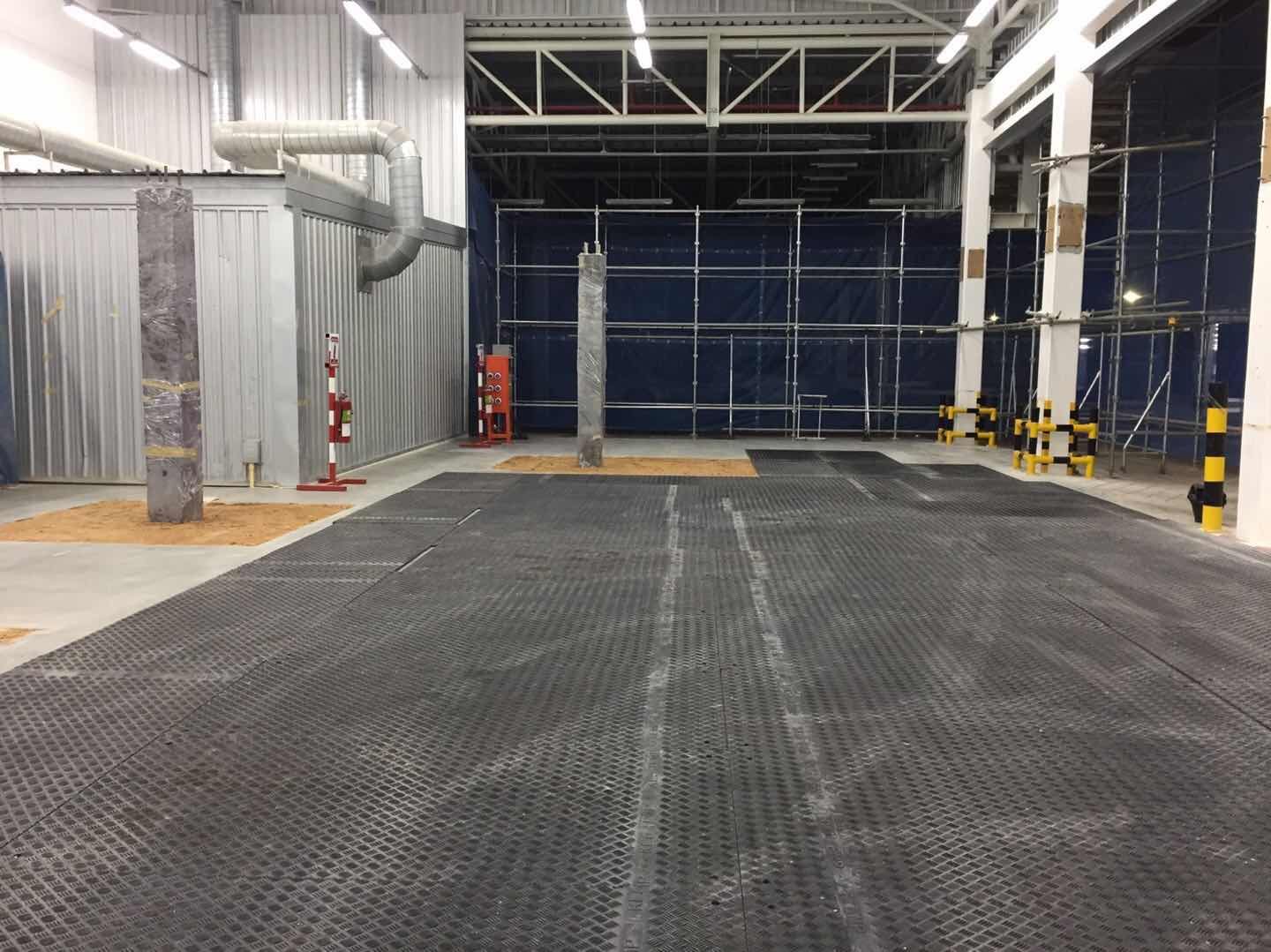
Tread profile alignment ensures operational safety daily. You must match the surface design to the primary user. Mismatched treads cause dangerous slippage on site.
Aggressive deep cleats: These provide maximum mechanical traction. They work best for heavy machinery operating in deep mud. The deep grooves channel mud away from tires efficiently.
Low-profile treads: These accommodate pedestrian traffic perfectly. Workers safely navigate walkways without tripping over aggressive bumps. Wheelbarrows roll smoothly across the subtle surface. These subtle profiles help maintain ADA compliance on public sites.
Dual-sided options: Many boards feature varying textures on opposite sides. One side features deep cleats while the other remains subtle. You maximize utility across varying project phases. You simply flip the board based on daily operational needs.
Connection systems secure the entire roadway grid tightly. You must evaluate the linkage mechanisms carefully. They hold your construction site road board together under stress. Metal connectors offer exceptionally high shear strength. Polymer connectors resist corrosion fully in wet environments. Both styles prevent dangerous mat separation during operations.
Tracked vehicles generate massive torque during sharp turns. This rotational torque easily rips unconnected mats apart. Mat separation exposes the soft ground beneath immediately. You mitigate this severe risk using robust 4-way connection points.
Align all connector holes precisely before inserting locking pins.
Utilize 4-way links at all intersecting panel corners.
Inspect polymer links daily for early signs of stress fatigue.
Remove all connectors entirely before attempting to lift panels.
Clear mud from connector joints using high-pressure air daily.
Deployment ergonomics directly impact crew fatigue levels. Standard sizes typically weigh between 60 and 85 pounds. This specific weight allows manual handling without heavy lifting equipment. Built-in handholds are absolutely necessary for rapid deployment. They enable safe two-person lifting techniques consistently. Crews position boards rapidly using these ergonomic grips. Handholds prevent pinched fingers during tight grid assembly.
Thermal expansion presents a genuine environmental challenge. High-density polyethylene expands naturally in extreme heat. Direct summer sunlight raises internal surface temperatures significantly. You must leave adequate expansion gaps during summer installations. Placing boards tightly together causes severe surface buckling. The plastic pushes against itself forcefully as it heats. A small gap allows safe thermal movement horizontally.
Cleaning extends material lifespan considerably over time. You should establish strict standard operating procedures immediately. Crews must pressure-wash every temporary roadway panel between jobs. High-pressure water strips away abrasive mud quickly. This crucial step prevents the transfer of invasive plant species. It removes embedded sharp rocks safely from the treads. Proper storage involves stacking them perfectly flat. You should utilize dedicated pallets for winter storage.
Contractors constantly debate between leasing and purchasing equipment. The leasing scenario suits specific operational profiles perfectly. Renting makes sense for one-off specialty projects. You might need extreme heavy-lift crane mats rarely. Leasing eliminates long-term yard storage requirements entirely. It works exceptionally well if you lack yard infrastructure. You simply return the assets once the project concludes.
The buying scenario favors continuous daily operations. Purchasing your own ground protection mat fleet drives high efficiency. You deploy assets instantly without waiting on rental yards. Fleet ownership eliminates recurring leasing logistics and paperwork. You avoid unexpected shortage delays during busy construction peak seasons. You control your asset availability fully. Owning equipment streamlines emergency response times significantly.
Shortlisting vendors requires rigorous questioning before committing. You must ask suppliers about warranty terms upfront. Investigate raw material purity carefully during vendor selection. Ask them directly about recycled content percentages. High recycled content may reduce overall flexibility under load. Confirm their lead times for replacement parts and pins. Reliable suppliers stock linkage pins continuously for immediate shipping.
Buying the right polymers remains a solid strategic investment. It ensures site efficiency and deep risk mitigation daily. Superior materials keep heavy machinery moving through harsh conditions. They protect delicate ecosystems flawlessly from contamination. You eliminate the constant replacement cycles of timber completely.
Audit your upcoming project pipeline carefully today. Assess your most common soil challenges comprehensively across sites. Request sample boards to test surface traction firsthand. Pilot a small fleet before executing a full-scale rollout.
Map out access routes meticulously before deploying heavy equipment.
Calculate dynamic load requirements accurately for your heaviest machinery.
Train crews thoroughly on proper four-way connection techniques.
Implement mandatory pressure-washing protocols strictly between site transfers.
A: They typically last between three and ten years. The exact timeframe depends heavily on panel thickness and frequent vehicle types. Strict adherence to proper maintenance protocols extends their lifespan. Regular cleaning and avoiding steel-track zero-radius turns keep them intact longer.
A: Yes, but you must exercise extreme caution. High-density polyethylene provides immense durability. However, aggressive steel tracks performing tight zero-radius turns will accelerate surface wear. They can shear the treads completely off. We recommend specific transition techniques. Utilize thicker composite mats for frequent steel-track operations.
A: They perform exceptionally well in extreme cold. The polymer retains full structural integrity in freezing conditions. It does not become brittle or shatter under pressure. However, surface ice requires standard site management. Treads become slick when frozen. Apply construction sand or safe de-icers to maintain traction.
A: The recognized industry standard measures four by eight feet. This specific dimension averages around 86 pounds. This footprint provides an optimal balance. It covers significant ground area efficiently. It remains light enough for two workers to maneuver manually without lifting machinery.


