

close
Choose Your Site
Global
Social Media


Views: 0 Author: Site Editor Publish Time: 2026-06-27 Origin: Site


Upgrading your system requires more than routine maintenance. It demands a critical calculation balancing throughput, belt strain, and material integrity. Selecting the wrong bucket material accelerates belt wear rapidly. It increases grain damage and risks strict non-compliance against agricultural safety standards. You cannot afford unexpected leg downtime during peak harvest seasons. Faulty components bring entire processing lines to a complete halt. This guide provides an objective framework for facility engineers and farm operators. We help you finalize your selection between HDPE, nylon, and steel based on actual operational realities. You will learn how material choices directly impact discharge efficiency and system longevity. By following these technical guidelines, you protect your mechanical infrastructure. Make informed decisions to maximize your handling capacity today.
HDPE is the industry baseline for standard grain operations, offering the best cost-to-weight ratio.
Nylon requires a higher upfront investment but is mandatory for highly abrasive agricultural materials (e.g., soybeans, feed pellets).
Steel remains the standard for extreme impact and heavy-duty processing but introduces significant belt weight and potential static/spark risks.
Upgrading bucket capacity or material requires recalculating belt load and motor pull to prevent catastrophic system failure.
Using the wrong material causes cascading operational failures across your facility. Facility managers often underestimate how deeply bucket selection impacts daily profitability. Let us explore the real physical impacts of these mismatched components.
Premature wear at the bucket lip reduces volumetric capacity over time. Abrasive friction from seed hulls slowly shaves down the leading edge of the plastic. This forces longer runtimes to hit your target harvest volumes. Operators often overlook this lip abrasion until throughput drops significantly. Constant maintenance stops severely impact your tight harvest windows. Replacing entire sections of the elevator leg halts production completely. Choosing a highly durable bulk material handling bucket mitigates these disruptive maintenance intervals.
Inflexible, rigid buckets cause hidden grain bruising and cracking. Improper discharge trajectories slam seeds forcefully against the metal casing. This violent impact creates dust fines and lowers your final crop grade. Buyers reject damaged grains or pay lower premium prices. Soft-handling plastics absorb minor impacts to protect delicate kernels. They cushion the grain during the scooping phase in the boot. Protecting product integrity directly preserves your profit margins.
Buckets account for a massive percentage of the total leg weight. Swapping to heavier materials without upgrading the belt or motor leads to rapid equipment degradation. Excess weight stretches the belting and strains the splice joints. The tensioning tail pulley must work harder to maintain alignment. System failure becomes imminent if you ignore specific load calculations. A snapped belt causes catastrophic internal damage to the casing. Always calculate the specific gravity of your commodity alongside the hardware weight.
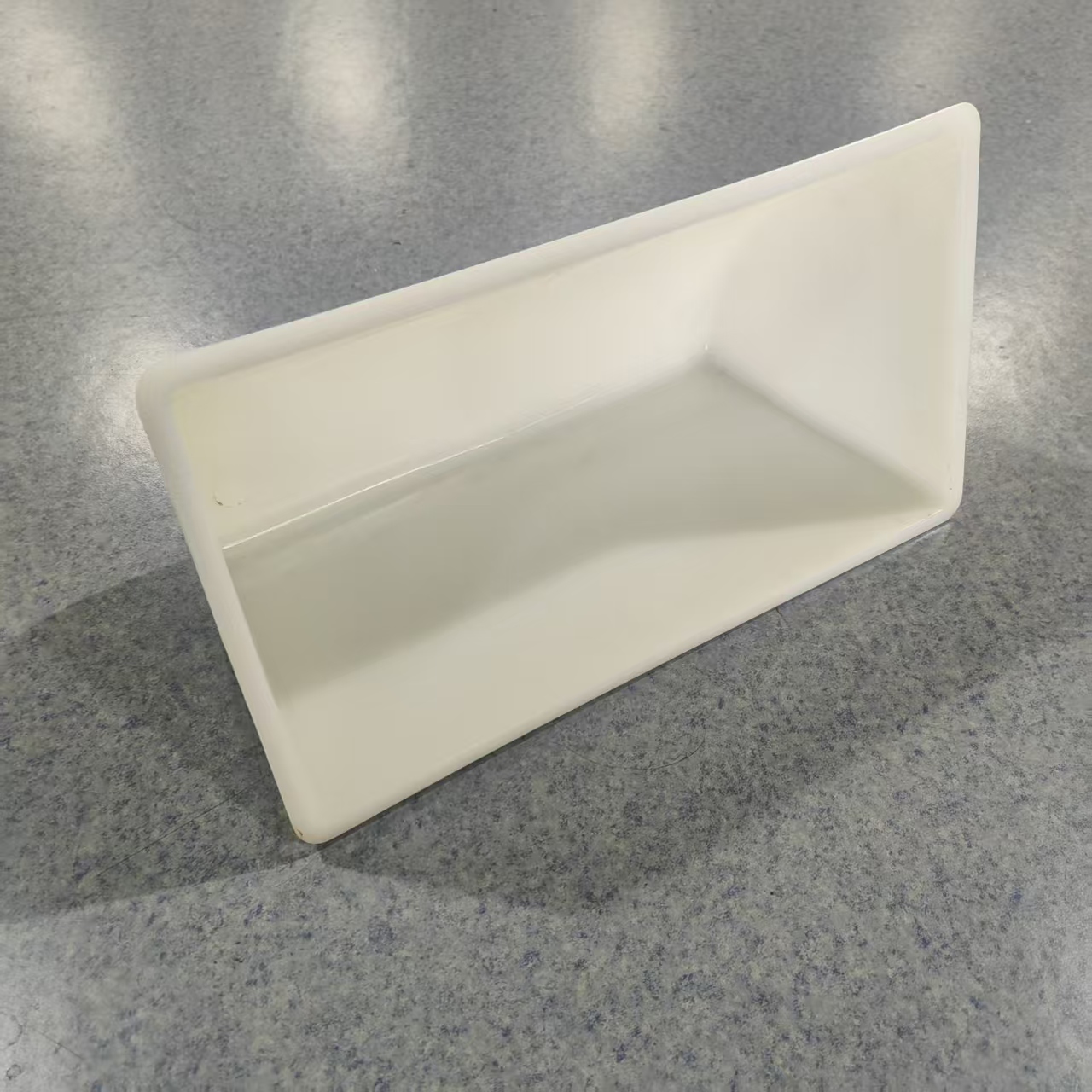
Each material offers distinct physical properties suited for different agricultural commodities. Understanding these structural differences prevents expensive installation mistakes. You must match the polymer or metal to your specific grain characteristics.
Strengths: HDPE is lightweight and highly effective for general use. It naturally resists caking from damp materials. The polymer absorbs minor impacts without permanent deformation. Its slick internal surface ensures excellent discharge efficiency. It serves as the perfect farm grain bucket for daily usage.
Limitations: Highly abrasive materials cause rapid wear on the leading edge. HDPE also possesses a lower temperature threshold compared to industrial metals. It can warp if exposed to excessive friction heat.
Best fit: Standard corn, wheat, and general free-flowing grains.
Strengths: Nylon delivers exceptional impact resistance. It stays highly resistant to friction and aggressive abrasion. The structure maintains its molded shape under heavy mechanical stress. Many facilities rely on a heavy-duty grain elevator bucket molded from nylon for demanding jobs. It rarely cracks under high-capacity loads.
Limitations: It requires a larger initial capital outlay than standard HDPE. Nylon naturally absorbs slight amounts of ambient moisture. This is rarely an issue in standard grain processing. However, it matters deeply in high-precision or highly humid environments.
Best fit: Soybeans, fertilizer, rough feed milling, and high-throughput commercial elevators.
Strengths: Steel offers unmatched structural integrity. It plows through compacted materials effortlessly. Stainless steel acts as the optimal choice for strict sanitary requirements. It thrives in highly corrosive environments where plastics degrade. It will not melt or deform under high operational heat.
Limitations: Metal is extremely heavy. It requires reinforced belting and higher motor capacity. Steel is prone to permanent denting upon severe impact. It also presents a potential spark hazard requiring rigorous static grounding protocols.
Best fit: Sharp industrial agricultural byproducts. It is also required where local fire codes strictly mandate metal over plastic.
Selecting the perfect agricultural conveyor bucket demands systematic technical evaluation. You cannot guess the correct specifications.
Assess whether existing belts and splice joints can handle a material switch. Transitioning from lightweight HDPE to heavy steel often doubles the dead weight. Check your motor amperage and belt tensile strength first. A standard belt will stretch permanently under the added load. Always review the manufacturer specifications before ordering heavier units. You must factor in the weight of the fully loaded grain, not just the empty hardware.
Material choice directly maps to your elevator speed. Lighter plastics perform exceptionally well in high-speed centrifugal discharge systems. The smooth polymer surfaces allow grain to exit cleanly at the top pulley. The speed flings the material precisely into the discharge chute. Heavy, slow continuous systems might necessitate durable steel. Wet materials often stick to steel, making plastic the better choice for damp crops.
Bucket geometry dictates the actual volume moved per hour. A standard D-Type profile works excellently for general agriculture. It offers a deep bottom for maximum capacity. Low-profile designs allow closer spacing on the belt. This configuration moves high volumes at slower speeds. Determine if your chosen material can be molded efficiently into your required shape.
Regulatory alignment is strictly non-negotiable in modern facilities. Highlight the absolute necessity of verifiable antistatic properties. Dust explosions pose a lethal threat in grain silos. Always specify FDA-compliant materials for food processing to prevent contamination. You must document these compliance certificates for safety audits.
Material Type | Relative Weight Profile | Abrasion Resistance | Primary Best Fit |
|---|---|---|---|
Standard HDPE | Very Light | Moderate | Standard Corn, Wheat |
Industrial Nylon | Light | Excellent | Soybeans, Feed Pellets |
Carbon/Stainless Steel | Very Heavy | Maximum | Sluggish Byproducts, Corrosives |
Changing physical components introduces new variables into your established system. Anticipate these mechanical risks before you begin installation. Proper planning prevents catastrophic startup failures.
Plastic materials deform differently than steel under tension. Using standard small-head bolts on plastic buckets causes severe issues. The heads easily pull through the back wall without proper elevator washers. Always use fanged bolts and specialized large-diameter washers. The fangs bite into the belt to prevent spinning. The large washer distributes the clamping force evenly across the plastic back wall.
Common Mistake: Neglecting to check the bolt length when switching from thin steel to thicker nylon walls. The nuts may not fully engage the threads, leading to loose hardware.
Best Practice: Run a brief empty test cycle after installation. Listen carefully for casing rubs or metallic clanking.
Upgrading to a larger or deeper profile might cause unexpected material trapping. Air gets trapped under the grain in tightly spaced belt setups. You must specify vented buckets for flour, light feed, or materials prone to air-locking. Strategically placed holes in the bottom allow air to escape. This ensures a complete fill during the scooping phase. It also eliminates suction during the discharge phase.
Static buildup presents a critical hazard when moving from steel to standard plastics. Grain friction generates significant static electricity during high-speed transit. Standard plastics act as insulators, storing this dangerous electrical charge. Advise operators to specify anti-static (ATEX-rated) plastic variants for dusty agricultural environments. Proper belt grounding remains strictly necessary regardless of your material choice.
Follow a clear logical progression to eliminate incompatible options quickly. This prevents ordering hardware your system cannot physically support.
Step 1: Baseline the material. Identify your exact commodity and its moisture content. Is it standard grain, abrasive feed, or heavy wet material? Free-flowing grains point toward HDPE. Highly abrasive materials firmly demand nylon.
Step 2: Audit the existing system. Evaluate your mechanical limits. Can the current motor and belt handle a substantial weight increase? If the answer is no, rule out steel immediately. You cannot risk snapping the belt under load.
Step 3: Evaluate lifespan value. Acknowledge the upfront investment differences between polymers. Nylon requires a higher initial capital outlay than standard plastics. However, this is frequently offset by a significantly longer lifespan in highly abrasive applications. Assess how often you want to schedule maintenance shutdowns.
Step 4: Vendor validation. Confirm technical compatibility with your supplier. Ensure they provide precise dimensional drawings before production. These specifications must perfectly match your existing belt bolt hole patterns. Drilling mismatched holes compromises the structural integrity of your belting.
Let us review the essential factors for a successful facility upgrade. The choice between HDPE, nylon, and steel is strictly dictated by the specific material handled. It relies equally on the structural load capacity of your existing elevator leg. Do not treat bucket replacement as a simple part swap. Evaluate your throughput goals, discharge speeds, and belt strength carefully. Upgrading to a durable polymer improves your daily harvest efficiency. Contact engineering support today. Submit your current bucket dimensions to an expert for a precise capacity and material recommendation.
A: You should specify a food grade bucket when handling grains destined for direct human consumption milling. These applications require FDA-approved, non-toxic materials. The internal surfaces must be easily cleanable. Pristine virgin HDPE or specialized stainless steel typically meet these stringent sanitary requirements to prevent cross-contamination.
A: Yes, many facilities use the "digger bucket" strategy. You place one steel bucket every ten to fifteen plastic buckets. This metal unit breaks up compacted material in the boot section. However, you must carefully monitor the setup for weight imbalance and ensure the belt can handle the isolated heavy loads.
A: Yes. Nylon requires specific fanged elevator bolts and oversized washers. Metal buckets can often use standard bolts. Plastic bucket walls need wider washers to distribute tension evenly. This prevents the metal bolt head from pulling straight through the polymer under heavy operational loads.
A: Those holes provide necessary venting. They release trapped air when handling powdery agricultural products like flour or fine feed. Without venting, the trapped air prevents the unit from filling completely. It also helps the powdery material discharge cleanly at the top pulley without suction holdback.


