

close
Choose Your Site
Global
Social Media


Views: 0 Author: Site Editor Publish Time: 2026-06-25 Origin: Site


High-temperature bulk material handling exposes conveying systems to extreme thermal and abrasive stress. These harsh conditions frequently lead to premature component failure. While polymer alternatives dominate standard agricultural and light industrial applications, they have strict functional limits. Operators favor polymers for their lighter mass and operational flexibility. However, these materials become severe liabilities when operational temperatures exceed their structural thresholds. Evaluating the transition to an industrial steel bucket requires analyzing thermal limits. You must also study abrasive wear patterns and their subsequent impact on belt or chain tension. This critical analysis ensures continuous, safe operation across demanding material handling facilities. We will explore exactly when and why steel outshines plastic in extreme environments. You will learn how to select the right bucket profile for your specific bulk aggregate. We also guide you through the necessary system calculations required before executing an equipment upgrade.
Polymer buckets risk structural deformation and melting when continuous material temperatures exceed 200°F–250°F (93°C–121°C).
A steel elevator bucket delivers superior tensile strength and impact resistance for handling heavy, abrasive, or hot aggregates like clinker, foundry sand, and industrial powders.
Upgrading to steel requires calculating the added mass to ensure the existing belt, chain, and drive motors can handle the increased static and dynamic loads.
Customizing dimensions—such as selecting a deep type steel bucket—maximizes throughput without requiring an increase in conveyor speed.
Operating a bucket elevator safely requires understanding the precise thermal thresholds of your internal components. We frequently see operators push High-Density Polyethylene (HDPE) and Nylon beyond their intended limits. HDPE typically handles continuous operating temperatures up to 180°F. Nylon and specialized Polyurethane might briefly survive up to 250°F. However, these plastics degrade rapidly under sustained heat. In stark contrast, carbon steel operates comfortably at 400°F. Stainless steel variants easily manage continuous exposure up to 1000°F. You must respect these limits to maintain facility safety.
The failure mechanics of plastics under heat are severe. When temperatures rise, polymers experience thermal expansion. They warp and lose their engineered profile. This warping drastically reduces your conveying capacity. Furthermore, warped plastic rubs against the elevator casing. Friction generates even more heat. Catastrophic melting soon follows. Melted polymer gums up the elevator belt and causes dangerous jams. It can even trigger secondary equipment fires if friction sparks ignite suspended dust.
Steel eliminates these catastrophic thermal risks completely. A high temperature conveyor bucket maintains absolute dimensional stability. It refuses to warp under heavy friction or extreme heat loads. This structural rigidity prevents dangerous material spillage inside the boot section. Furthermore, steel protects the elevator housing from friction sparks. You avoid jamming, protect your belt, and maintain a predictable, steady throughput.
Choosing the correct metal alloy determines your system's longevity. Carbon steel offers incredible impact resistance. It excels in handling dry, abrasive aggregates like cement clinker. However, carbon steel rusts quickly in damp conditions. Stainless steel provides the necessary defense against moisture and chemical attack. You must analyze your material temperature, moisture content, and chemical reactivity.
Use the following decision matrix to guide your material selection:
Material Grade | Maximum Temperature Limit | Best Application Scenarios | Moisture & Chemical Resistance |
|---|---|---|---|
Standard Carbon Steel | 400°F - 500°F (204°C - 260°C) | Dry, heavy abrasive aggregates, foundry sand | Low |
304 Stainless Steel | 800°F (426°C) | Moderate moisture, warm fertilizer, food processing | High |
316 Stainless Steel | 1000°F+ (537°C+) | Corrosive off-gassing, harsh chemicals, extreme heat | Excellent |
Your bucket profile dictates how efficiently material moves from the boot to the discharge point. Heavy, dense aggregates require robust containment. A high capacity elevator bucket provides the volume necessary to move dense materials without overloading the belt. You achieve higher tonnage per hour without increasing your belt speed.
Conversely, slow-moving elevators require different geometry. You should specify a deep type steel bucket when handling free-flowing materials in slower systems. Deep profiles improve fill-factors significantly. They also guarantee an optimal discharge trajectory. The material leaves the bucket smoothly at the head pulley rather than falling back down the elevator leg.
Manufacturers produce steel buckets using two primary methods. Seamless stamped steel undergoes deep drawing. This creates smooth, rounded corners. Stamped buckets deliver excellent, clean discharge characteristics. Heavy-duty fabricated steel involves cutting and welding thick steel plates. Welded buckets provide maximum impact resistance. You use welded designs for massive, jagged lumps that would dent thinner stamped metal.
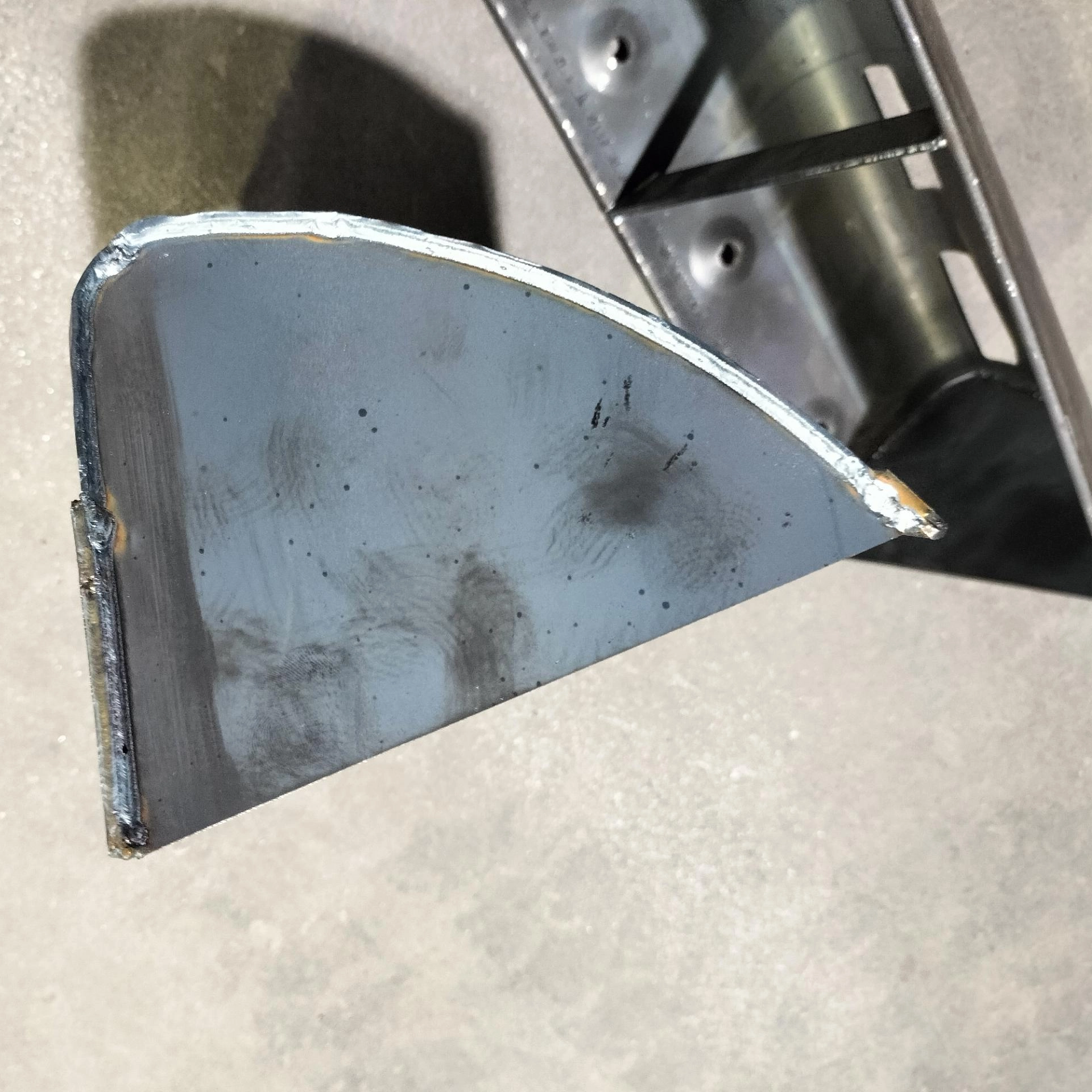
Heat rarely acts alone in industrial environments. Abrasive wear destroys system components just as quickly as thermal stress. High-friction materials present unique challenges. Jagged particulates like glass cullet, cement clinker, and raw potash act like sandpaper. These sharp materials easily gouge and shave plastic buckets. Over time, plastic walls thin out and shatter. Hardened steel deflects these jagged edges entirely. Steel absorbs the initial shock and resists continuous sliding abrasion.
Moisture compounds the danger. High heat combined with wet material creates corrosive off-gassing. Steam trapped inside an elevator leg accelerates rust exponentially. You must introduce a corrosion protected bucket to survive these toxic environments. Galvanizing provides a basic sacrificial barrier. Specialized baked-on coatings offer mid-tier protection. However, solid stainless steel alloys provide the ultimate, integral defense against severe chemical corrosion.
Powder conveying introduces another specific threat. Fine powders behave unpredictably under pressure. They seal tightly in corners and cause bridging. Bridged powder reduces bucket capacity by half. Plastic buckets flex and allow compacted powder to remain stuck. Rigid steel edges act differently. They dig aggressively through compacted materials in the boot. Manufacturers also design steel buckets with precision venting holes. These vents release trapped air, preventing bridging and ensuring a clean discharge.
Specify reinforced steel wear-lips on the digging edge of your buckets.
Install slightly thicker gauge steel in the primary impact zones.
Regularly inspect the elevator boot for accumulated corrosive sludge.
We must acknowledge the primary physical drawback of steel. Steel is inherently much heavier than any polymer alternative. This added mass affects every single component in your material handling system. You cannot simply unbolt plastic parts and swap in heavy metal replacements. Doing so invites immediate mechanical failure.
System recalculation is absolutely vital. You must evaluate the entire drive assembly. The belt or chain tension will increase significantly. You need to verify the PIW (Pounds per Inch of Width) rating of your existing belt. Heavy steel buckets might exceed the current belt's tensile strength, causing it to snap. Bearing loads will multiply. Your drive motor requires higher starting torque to overcome the new static load. You must calculate these metrics precisely before purchasing any hardware.
Fastener and mounting integrity also require an upgrade. Heavy metal buckets generate immense shear forces during the digging phase. Standard bolts will fail. You must utilize specialized elevator bolts. Fanged bolts or ribbed neck bolts bite into the belt, preventing the heavy bucket from tearing out. Additionally, standard nylon-insert locknuts melt in high-temperature applications. You must secure every bolt using all-metal prevailing torque locknuts. This guarantees the heavy buckets remain firmly attached during continuous operation.
Reusing old, fatigued bolts to secure brand new heavy metal buckets.
Ignoring the motor's starting torque limits, leading to burnt-out drives.
Failing to punch precise mounting holes in the belt, causing misaligned bucket tracking.
Industrial facility managers evaluate equipment success by measuring reliability and continuous uptime. A heavier, metallic upgrade fundamentally changes your operational lifespan. Plastic components require frequent inspections and routine replacements. Steel minimizes these interventions. You drastically reduce unplanned downtime. You eliminate the catastrophic failure risks associated with melted polymer jams. Over a ten-year operational lifecycle, the robust nature of metal hardware requires significantly less replacement labor.
Proper procurement requires a methodical approach. Do not guess your system parameters. Use this strict 3-step evaluation checklist to guide your engineering team:
Verify peak material temperature: Measure the maximum heat the material reaches during worst-case scenarios, not just normal operations.
Assess bulk density and abrasiveness: Document the exact weight per cubic foot and note any sharp, jagged particulate characteristics.
Audit existing drive and belt capacity: Work with an engineer to confirm your motor torque and belt PIW rating can handle the added metallic mass.
Take proactive steps today. Download a technical spec sheet for your facility. Contact an engineering specialist to calculate accurate bucket dimensions. You must verify system load compatibility before beginning any serious retrofit project.
Polymer components certainly have their place in standard, ambient material handling. However, the physical realities of high-temperature and highly abrasive conveying strictly dictate the use of robust metal. Extreme heat melts plastic, while jagged aggregates destroy thin walls. Steel neutralizes both of these destructive forces effortlessly. Upgrading requires careful recalculation of system mass, drive torque, and fastener strength. It demands rigorous engineering oversight.
Specifying the right steel elevator bucket is not just a simple parts replacement. It serves as a comprehensive engineered upgrade. By respecting thermal limits and matching materials to your aggregate, you protect your entire material handling system. You secure long-term operational success, minimize dangerous breakdowns, and maintain consistent, reliable throughput in the harshest industrial environments.
A: Carbon steel safely handles continuous material temperatures up to 400°F (204°C). Specialized stainless steel alloys can manage continuous exposure from 800°F up to over 1000°F (537°C+). Your exact limit depends heavily on the specific steel grade used and whether the heat exposure is continuous or intermittent.
A: It often depends on your current belt's PIW (Pounds per Inch of Width) tensile rating. Steel buckets add significant weight compared to plastic. You must calculate the added mass of the buckets plus the bulk material. A structural load calculation strictly determines if your current belt can survive the upgrade.
A: Deep buckets hold significantly more volume. However, they occasionally struggle to discharge sticky materials cleanly. Cohesive aggregates can pack tightly inside the deeper bottom. Venting the bucket bottom or utilizing specific smooth surface finishes mitigates this issue. This ensures a clean discharge trajectory at the pulley.
A: Superficial coatings eventually wear away under continuous abrasion. To prevent total protection loss in highly abrasive zones, select integral material properties like solid stainless steel. We also recommend specifying reinforced, wear-resistant lips or thicker steel gauges at the primary impact points to extend operational life.


