

close
Choose Your Site
Global
Social Media


Views: 0 Author: Site Editor Publish Time: 2026-11-19 Origin: Site


In high-volume industrial environments, specifying the wrong polymer for wear components leads to premature failure, material bottlenecks, and excessive maintenance downtime. Engineering and procurement teams frequently struggle to balance the baseline requirements of standard plastics against the long-term durability required for severe abrasion and impact zones. Evaluating the structural and molecular differences between Ultra-High Molecular Weight Polyethylene and High-Density Polyethylene drives an evidence-based selection process. This guide breaks down the technical specifications, mechanical properties, and application-specific performance of both materials. We will examine how molecular chain length alters physical behavior under heavy loads. You will learn exactly when to specify each polymer to maximize operational uptime and prevent catastrophic equipment damage.
Molecular Density Dictates Durability: UHMW possesses a molecular chain up to 10 times longer than HDPE, directly translating to superior abrasion resistance and impact strength.
Terminology Clarification: UHMW and UHMWPE refer to the exact same material; the "PE" simply stands for polyethylene.
Implementation Realities: Both materials share similar chemical resistance, but UHMW requires specific fastening and machining considerations due to its high thermal expansion rate and susceptibility to cold flow under heavy static loads.
High-Density Polyethylene features a tightly packed molecular structure. The polymer chains align closely together without extensive branching, resulting in a rigid, durable, and highly moisture-resistant plastic. Manufacturers typically produce this material using standard extrusion or injection molding processes. The polymer easily melts into a liquid state when heated, allowing for rapid, high-volume production of complex shapes, continuous profiles, and large-format sheets.
In industrial settings, a standard HDPE sheet serves as a highly versatile, general-purpose material. Common applications include chemical storage tanks, fluid piping, light-duty chain guides, and static containment barriers. It offers excellent tensile strength and structural rigidity. When engineers need a reliable plastic for environments that do not experience extreme sliding friction or massive kinetic impacts, HDPE delivers consistent, predictable performance. It is easy to weld, form, and machine, making it a staple in fabrication shops worldwide.
Ultra-High Molecular Weight Polyethylene is defined by its extreme molecular mass. While standard polyethylene has a molecular weight in the hundreds of thousands, UHMW typically ranges from 3 to 6 million atomic mass units (amu). This massive chain length fundamentally alters the physical behavior of the plastic. When heated, UHMW does not melt into a true liquid state. Instead, it transitions into a highly viscous, rubbery gel.
Industry professionals frequently use different acronyms, but UHMW and UHMWPE are identical terms. Because it cannot flow like a standard liquid plastic, manufacturers cannot use traditional extrusion. Producing a UHMWPE sheet requires specialized ram extrusion or compression molding under extreme pressure and heat. The raw polymer powder is fused together over long curing cycles to form solid billets or sheets.
In the broader hierarchy of engineering plastics, UHMW occupies a unique position. Engineers choose it over alternatives like Nylon, PTFE, or PEEK when extreme impact absorption and unparalleled abrasion resistance are the absolute highest priorities. It excels in ambient temperature environments where other structural plastics would rapidly wear away or shatter under heavy industrial use.
The defining characteristic of UHMW is its ability to withstand sliding friction. In standardized sand-slurry abrasion tests, evaluating UHMWPE vs HDPE reveals a massive performance gap. UHMW consistently outperforms HDPE by a significant margin. Remarkably, it even outlasts carbon steel in sliding abrasion scenarios. When subjected to continuous aggregate flow, standard steel plates will erode faster than a properly installed UHMW panel.
The mechanism of wear differs entirely between the two materials. When sharp, abrasive bulk aggregates slide against HDPE, the shorter polymer chains shear and tear away. The surface degrades rapidly, creating gouges and channels that further accelerate wear. Conversely, the ultra-long intertwined molecular chains of UHMW resist shearing. The material effectively deflects the abrasive particles. Instead of tearing, the surface micro-polishes over time, maintaining its structural integrity even under continuous aggregate flow. This makes it the default choice for mining and aggregate handling.
Kinetic energy absorption is critical in heavy industry. The long molecular chains of a UHMW polyethylene sheet act like a microscopic shock absorber. When struck by heavy objects, the material dissipates the kinetic energy throughout its polymer matrix. It bends and rebounds without cracking or shattering. This impact resistance remains fully intact even at extreme sub-zero temperatures, making it ideal for outdoor winter operations or cryogenic freezing lines.
HDPE has a much lower impact threshold. Under sudden, massive kinetic loads, standard high-density polyethylene becomes susceptible to stress cracking and brittle failure. However, this creates a specific engineering trade-off regarding stiffness. HDPE offers greater structural rigidity. It holds its shape better under static loads and spans wider gaps without sagging. UHMW sacrifices a degree of this stiffness to achieve its unparalleled kinetic energy absorption.
Friction dictates efficiency in bulk material handling. Both polymers offer smooth surfaces, but their dynamic and static friction coefficients differ drastically. UHMW possesses an incredibly low coefficient of friction, comparable to Teflon (PTFE). It is inherently self-lubricating, meaning it does not require external greases or oils to maintain a slick surface.
This self-lubricating nature dramatically alters material flow dynamics. Installing a UHMWPE liner prevents ratholing, bridging, and material hang-ups in hoppers and chutes. Wet, sticky, or freezing materials slide off the surface effortlessly, ensuring mass flow and preventing production bottlenecks. HDPE, while smooth, generates higher friction under load. Bulk materials are far more likely to adhere to an HDPE surface, leading to blockages, restricted flow rates, and the need for manual intervention to clear jammed silos.
Both materials share identical chemical resistance profiles. They offer excellent defense against a broad spectrum of harsh acids, aggressive alkalis, and industrial solvents. They do not corrode, rust, or degrade when exposed to standard industrial chemicals like sulfuric acid, sodium hydroxide, or chlorine solutions. This makes them highly suitable for washdown environments in food processing or chemical manufacturing.
Operational temperature limits are also similar. Both materials have a continuous use ceiling of approximately 180°F (82°C). Pushing beyond this limit causes thermal degradation. The plastics will soften, lose their mechanical strength, and eventually deform. For high-heat applications exceeding these limits, engineers must pivot away from polyethylene entirely. In those scenarios, high-performance plastics like PTFE or PEEK become mandatory to maintain structural integrity.
Performance Metric | HDPE | UHMWPE |
|---|---|---|
Molecular Weight | 0.3 - 0.5 million amu | 3.0 - 6.0 million amu |
Abrasion Resistance | Moderate | Exceptional (Outperforms Steel) |
Impact Strength | Good (Prone to cracking under extreme load) | Unmatched (Will not shatter) |
Coefficient of Friction | Low | Extremely Low (Self-Lubricating) |
Structural Stiffness | High | Moderate |
Max Operating Temperature | 180°F (82°C) | 180°F (82°C) |
Moisture Absorption | Near Zero | Near Zero |
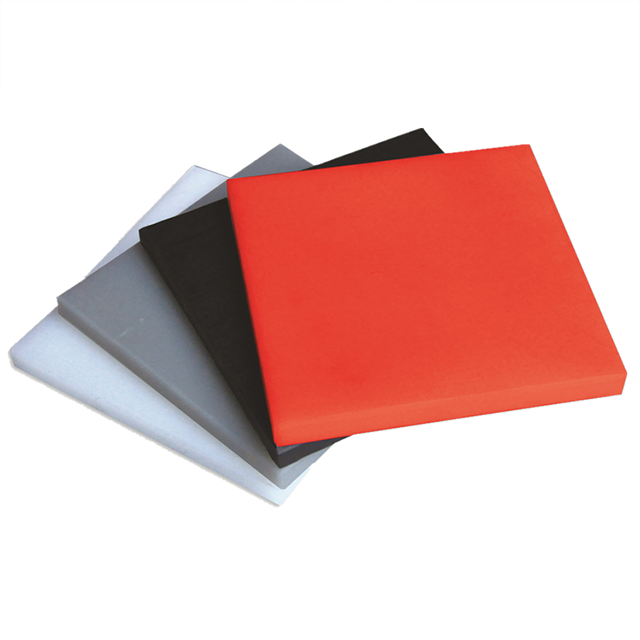
The primary success criteria in bulk handling involve eliminating blockages and protecting the underlying steel infrastructure from wear. When processing highly abrasive aggregates like coal, iron ore, crushed rock, or grain, a UHMW liner is mandatory. The continuous sliding friction of these materials will destroy standard steel or lower-grade plastics in a matter of weeks. UHMW absorbs the abrasion, keeps the material flowing smoothly, and protects the expensive steel fabrication underneath.
Conversely, an HDPE sheet suffices perfectly for non-abrasive, free-flowing powders. If a facility handles dry flour, plastic pellets, or light agricultural products, the extreme abrasion resistance of UHMW is unnecessary. HDPE provides the required smooth surface and moisture barrier for efficient containment. It is easier to weld into custom hopper shapes and provides excellent structural support for lighter loads.
In high-speed conveyor systems, engineers focus on minimizing drive-motor strain and preventing metal-on-metal wear. Roller chains, modular belts, and guide rails generate constant friction. Specifying a UHMW sheet for wear strips, chain guides, and star wheels drastically reduces this friction. The self-lubricating properties lower the amperage draw on drive motors, reduce ambient noise levels, and extend the lifespan of the metal conveyor components.
HDPE is better suited for the structural guards, drip pans, or non-contact components surrounding the conveyor. It provides the necessary rigidity for safety shields and containment walls where moving parts do not constantly rub against the plastic. Using HDPE for these static components ensures structural stability while reserving the higher-performance UHMW for direct contact wear zones.
Marine environments subject infrastructure to massive kinetic forces. When a cargo vessel docks, the impact energy transferred to the pier is immense. The success criteria here rely entirely on absorbing that kinetic impact without structural failure. UHMW is the industry standard for dock bumpers, fender pads, and lock doors. It compresses slightly, dissipates the ship's kinetic energy, and springs back into shape without cracking, even in freezing seawater.
HDPE cannot handle this level of blunt force without risking brittle failure over time. Instead, marine engineers utilize HDPE for static applications. It serves exceptionally well for marine cabinetry, static decking, floating dock sub-structures, and retaining walls where moisture resistance is required, but heavy kinetic impacts from large vessels are absent.
Fabricating wear components requires understanding how these polymers behave under cutting tools. Because UHMW resists melting and transitioning into a liquid, it requires specific machining techniques. High-speed steel tools will generate too much friction, causing the UHMW to gum up, warp, and produce poor surface finishes. Machinists must use sharp, carbide-tipped tooling, high spindle speeds, and aggressive feed rates to shear the material cleanly without inducing heat buildup. Proper chip evacuation is critical to prevent the material from re-welding to the cutting tool.
HDPE is significantly easier to machine. It behaves predictably under standard routers, saws, and drills. It produces clean chips, holds tight tolerances easily, and does not require the same level of heat management as UHMW. For complex, heavily routed parts that do not require extreme wear resistance, HDPE offers a much simpler and faster fabrication process. Furthermore, HDPE can be easily plastic-welded using hot air or extrusion welders, allowing fabricators to build large, seamless tanks and complex geometries.
Industrial facilities must account for the physical labor and operational downtime required to replace worn components. Replacing a chute liner is a massive undertaking. It often requires confined-space entry permits, specialized rigging, scaffolding, and extended plant shutdowns. Analyzing UHMW vs HDPE in this context highlights the importance of longevity in severe environments.
If a facility installs a standard polymer in a high-abrasion zone, maintenance teams will need to replace that liner frequently. Every replacement cycle halts production and consumes hundreds of labor hours. Utilizing UHMW in these severe wear zones extends the replacement cycle dramatically. The material stays in service longer, keeping the plant operational, maintaining consistent material flow, and keeping maintenance personnel out of hazardous confined spaces.
Identify the highest-wear zones in your material handling system.
Measure the current replacement frequency of existing steel or standard plastic liners.
Calculate the labor hours and lost production time associated with each replacement cycle.
Specify UHMW for these critical bottlenecks to extend the operational lifespan.
Both polymers possess a high coefficient of linear thermal expansion (CLTE). They expand and contract significantly with temperature fluctuations. A general rule of thumb is that polyethylene will expand approximately 1/8 inch per foot for every 100°F change in temperature. If a maintenance team rigidly bolts a plastic liner to a steel chute, the plastic will buckle, warp, and eventually shear the bolts as temperatures rise.
Mitigating this risk requires specific fastening engineering. Installers must drill slotted or oversized holes in the plastic to allow for lateral movement. Specialized elevator bolts or counterbored heavy-duty fasteners should be used to secure the sheets without clamping them down rigidly. A steel washer should be placed under the bolt head to distribute the load. Furthermore, installers must leave calculated expansion gaps between adjoining sheets to accommodate thermal growth during peak summer temperatures.
Neither UHMW nor HDPE are structural, load-bearing plastics. They are highly susceptible to cold flow, also known as creep. If subjected to continuous, heavy, localized static loads, the polymers will slowly deform and flow away from the pressure point over time. Bolting a heavy motor directly to a polyethylene plate will eventually result in loose bolts as the plastic compresses under the sustained weight.
To prevent structural failure, engineers must design systems where the polymer acts strictly as a wear surface. The plastic must be fully supported by a rigid steel or concrete substrate. You cannot use these materials to build freestanding load-bearing walls, structural support beams under heavy silos, or unsupported bridge spans. The steel framework must carry the structural load, while the plastic simply handles the surface friction and abrasion.
Natural, unpigmented grades of both polymers are vulnerable to ultraviolet radiation. Prolonged exposure to direct sunlight breaks down the polymer chains through photo-oxidation. The material will eventually chalk, become brittle, lose its impact resistance, and develop surface micro-cracks.
For outdoor applications like dock fenders, truck bed liners, or exterior conveyor guides, engineers must specify UV-stabilized grades. Manufacturers typically add carbon black or specialized UV inhibitors during the molding process. The carbon black acts as a UV absorber, converting the harmful ultraviolet energy into harmless heat. This simple specification ensures the material retains its mechanical properties even after years of harsh sun exposure.
Always calculate thermal expansion gaps based on the maximum expected ambient temperature.
Use oversized holes and elevator bolts to allow the plastic to move independently of the steel substrate.
Ensure all plastic wear panels are fully backed by a rigid structural material.
Specify carbon-black filled grades for any component exposed to direct sunlight.
HDPE remains the optimal, highly practical choice for static containment, light-duty guides, and applications where chemical resistance is needed without severe abrasion. However, UHMW is the undisputed requirement for dynamic, high-impact, and high-friction industrial wear zones. Base your final material selection on three specific operational factors: the abrasiveness of the handled material, the kinetic impact of the process, and the acceptable frequency of maintenance downtime. Selecting the correct polymer ensures your equipment runs efficiently, prevents material blockages, and protects your underlying infrastructure from catastrophic wear.
Audit your existing wear zones to identify areas experiencing premature degradation or material flow blockages.
Request comprehensive material data sheets from your supplier to verify molecular weight specifications before installation.
Install test coupons of both materials directly in your active material stream to monitor and compare real-world abrasion rates.
Consult with a plastics engineer to calculate precise thermal expansion gaps for your specific operating temperature ranges.
A: Yes. They are identical materials. UHMW stands for Ultra-High Molecular Weight, and PE specifies the base polymer, Polyethylene. Industry professionals, engineers, and machinists use both acronyms interchangeably to describe the exact same high-performance plastic.
A: It depends on the definition of strength. UHMW has vastly superior impact resistance, tear strength, and abrasion resistance. However, both materials have similar tensile yield strengths. HDPE is slightly stiffer and holds its shape better under static conditions, but neither plastic is designed for heavy structural load-bearing.
A: UHMW leads the industry in durability and low friction for high-impact, ambient-temperature environments. It outperforms Nylon in wet conditions because it does not absorb moisture. However, if operational temperatures exceed 180°F (82°C), engineers must transition to PTFE or Nylon, as polyethylene will thermally degrade.
A: No. While HDPE is easily plastic-welded using hot air or extrusion welders, UHMW does not flow when heated. It turns into a gel, making traditional plastic welding highly difficult and generally ineffective. Joining UHMW requires mechanical fastening.
A: UHMW is the definitive industry standard for chute liners handling abrasive bulk materials. Its self-lubricating properties prevent material bridging, and its extreme abrasion resistance ensures the liner survives the continuous sliding friction of aggregates like coal, ore, or grain.
A: Machining requires sharp, carbide-tipped tools, high spindle speeds, and aggressive feed rates. Because the material resists melting, excessive friction from dull tools will cause heat buildup, leading to material gumming, warping, and poor surface finishes. Proper chip evacuation is critical.


