

close
Choose Your Site
Global
Social Media


Views: 0 Author: Site Editor Publish Time: 2025-09-17 Origin: Site


In today’s fast-paced industrial environment, automation and logistics systems have become the backbone of manufacturing. From raw material handling to finished product distribution, companies are under constant pressure to increase efficiency, reduce downtime, and maintain product quality. At the center of many of these processes lies a simple yet powerful component—conveyor chains.
Unlike belts or other mechanical conveyors, conveyor chains provide exceptional strength, precision, and adaptability across different industries. Whether it is moving automobile parts along assembly lines, transporting food products under strict hygienic conditions, or carrying heavy loads in mining operations, conveyor chains ensure the smooth functioning of complex systems. Their importance goes beyond simple transport—they are the unsung heroes that help modern industries achieve automation and operational excellence.
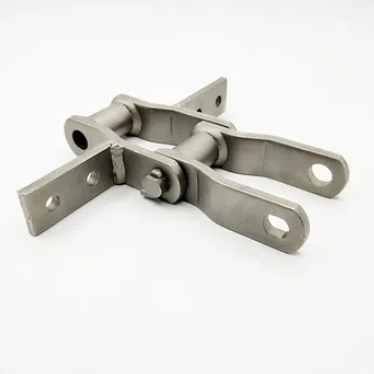
To understand why conveyor chains are so widely used, it is essential to examine their structure and function. A typical conveyor chain is made of interconnected links designed to transmit motion and bear loads. Depending on the application, these links can be made of carbon steel, stainless steel, or engineering plastics.
Roller Links: Designed to reduce friction and allow smooth interaction with sprockets.
Pins and Bushings: These serve as pivot points that enable articulation of the chain while providing stability under stress.
Plates: Flat or shaped components that provide structural strength.
Attachments: Special fittings such as brackets, extended pins, or carriers that allow the chain to perform unique functions like holding or pushing items.
The chain engages with a sprocket, converting rotary motion into linear motion. This design allows it to transmit power efficiently while carrying heavy or irregularly shaped loads. Conveyor chains excel in environments where precision, durability, and flexibility are required.
Higher load capacity compared to belt systems
Greater resistance to heat, chemicals, and harsh environments
Longer service life when properly maintained
Adaptability through attachments for specialized processes
These qualities make conveyor chains a preferred choice in industries where reliability and robustness are non-negotiable.
The automotive industry is synonymous with large-scale assembly lines where efficiency dictates competitiveness. Here, conveyor chains play a central role in moving car components with precision and speed.
Automobile chassis, engines, and large body parts are heavy and difficult to move using belts or manual labor. Conveyor chains provide the strength and durability to transport these components reliably.
Assembly operations such as welding, painting, or robotic installation require exact positioning. Conveyor chains ensure that components arrive at the right place, at the right time, without deviation.
Downtime in automotive plants can cost millions. Conveyor chains are designed for durability, reducing the risk of unexpected failures and ensuring continuous flow along production lines.
In a car manufacturing plant, overhead conveyor chains are often used to transport partially assembled vehicles between different workstations. Their ability to operate in both horizontal and vertical directions allows flexibility in plant design.
By integrating conveyor chains, the automotive industry can streamline operations, cut labor costs, and achieve consistent quality.
Food production presents unique challenges for conveying systems. Hygiene, safety, and compliance with international food standards are critical. Conveyor chains designed for this sector address these needs through specialized materials and designs.
Stainless Steel Chains: Offer resistance to corrosion caused by water, oils, and cleaning chemicals.
Plastic Chains: Lightweight and resistant to chemical cleaners, ideal for direct food contact.
Food-grade conveyor chains are often designed with smooth surfaces and minimal crevices to prevent bacterial growth. They are also easy to clean, reducing the risk of contamination.
Transporting baked goods, dairy products, or meat through production stages
Moving packaged items to labeling and distribution areas
Ensuring seamless operation in refrigerated or high-humidity environments
Compliance with FDA and ISO food safety standards
Reduced cleaning time and maintenance costs
Improved product safety and quality assurance
In this industry, conveyor chains are not only a tool for efficiency but also a guarantee of food safety and consumer trust.
Mining and heavy industrial operations represent some of the most demanding environments for mechanical equipment. Dust, abrasive particles, extreme temperatures, and immense loads put tremendous stress on conveying systems. Conveyor chains are engineered to withstand these challenges.
Conveyor chains can transport tons of raw materials such as coal, iron ore, and limestone across long distances without failure.
Chains made from high-grade alloy steels, often with heat treatments, resist wear and extend service life despite constant exposure to abrasive materials.
Whether underground in a coal mine or above ground in a steel plant, conveyor chains can operate in conditions that would quickly degrade other systems.
Given the cost of operational interruptions in mining, the reliability of conveyor chains ensures minimal downtime and consistent output.
Bucket conveyor chains are commonly used in cement plants to lift and transport raw materials to kilns. Their strength and endurance are unmatched, making them a crucial component of the production process.
By offering unmatched wear resistance and load-bearing capabilities, conveyor chains support the backbone of global heavy industries.
Across industries—from automotive to food processing and mining—conveyor chains prove to be indispensable. Their robust structure, adaptability, and ability to function in demanding environments make them critical for maintaining efficiency, safety, and productivity.
The future of conveyor chains lies not only in traditional strength and durability but also in innovations such as:
Smart monitoring systems for predictive maintenance
Eco-friendly materials to support green manufacturing
Customized designs to meet specialized industrial requirements
As global manufacturing continues to evolve, conveyor chains will remain a fundamental element driving sustainable growth and operational excellence.
When selecting conveyor chains, quality and reliability are paramount. This is why Jiangsu Jingwei Conveying Equipment Co., Ltd. stands out as a trusted partner in the industry.
With years of specialization in conveyor technology, the company provides solutions tailored to industries as diverse as automotive, food processing, logistics, and mining.
Their conveyor chains are made from premium materials, ensuring superior wear resistance, durability, and compliance with international standards.
Jiangsu Jingwei offers customized designs to meet unique operational requirements, from food-grade stainless steel chains to heavy-duty mining chains.
The company invests in advanced manufacturing processes and research, aligning with global trends in automation and sustainable development.
Beyond products, Jiangsu Jingwei is known for its technical support, ensuring clients benefit from smooth installation, maintenance, and long-term performance.
For businesses seeking to enhance efficiency, reduce downtime, and invest in durable solutions, partnering with Jiangsu Jingwei Conveying Equipment Co., Ltd. is a strategic choice. Their expertise ensures that your operations will benefit from world-class conveyor chain solutions designed for lasting success.


