

close
Choose Your Site
Global
Social Media


Views: 0 Author: Site Editor Publish Time: 2026-11-12 Origin: Site


Material failure in industrial fabrication frequently stems from specifying the wrong polymer for high-stress, abrasive, or chemically aggressive environments. Engineers and procurement teams must balance strength-to-density ratios, chemical resistance, and fabrication feasibility while managing raw material supply chain reliability. We see projects stall because teams select materials that look good on paper but fail on the shop floor. You need a technical evaluation framework for specifying, sourcing, and fabricating an HDPE sheet. This ensures the selected material meets strict industrial tolerances and performance criteria. We will break down exactly how to match polymer grades to environmental exposure, calculate unsupported span loads, and set up your CNC equipment to prevent edge melting.
HDPE offers exceptional chemical resistance and impact strength but requires specific thermal welding techniques because its low surface energy rejects traditional adhesives.
Specifying the correct hdpe sheet thickness and UV-stabilized grade is critical for preventing structural failure in outdoor or high-load applications.
Understanding the manufacturing process (extrusion vs. compression molding) is essential for predicting how the material will behave and hold tolerances during CNC machining.
Standard, Marine, and Food-grade classifications represent distinct material formulations with vastly different cost-to-performance ratios and regulatory compliances.
High-density polyethylene stands out in industrial applications due to its unique molecular structure. The polymer chains pack tightly together, yielding a high strength-to-density ratio. Density typically ranges from 0.93 to 0.97 g/cm³. This tight molecular packing gives the material excellent tensile strength without adding excessive weight to structural assemblies. You can replace heavy steel or aluminum components with this polymer to reduce overall equipment weight while maintaining structural integrity.
Chemical inertness is another primary reason engineers select this material. It resists harsh acids, alkalis, and organic solvents. You can submerge it in aggressive chemical baths, such as 70% sulfuric acid or concentrated sodium hydroxide, without risking degradation. Furthermore, it boasts a near-zero moisture absorption rate of less than 0.01%. Components machined from this polymer will not swell, warp, or lose dimensional accuracy when exposed to water, high humidity, or submerged marine environments.
Impact resistance remains consistent across broad temperature ranges. Unlike metals that become brittle or other plastics that shatter in freezing conditions, this polymer maintains its structural integrity in sub-freezing environments down to -40°F. This makes it highly suitable for cold-storage facilities, outdoor winter applications, and heavy-duty impact zones where forklifts or heavy machinery operate.
Selecting the right polymer requires comparing baseline properties against alternative industrial plastic sheets. Each material presents distinct engineering trade-offs that dictate its success or failure in the field.
Material | Key Strengths | Primary Limitations | Best Use Case |
|---|---|---|---|
HDPE | Excellent chemical resistance, high impact strength, easily welded. | High thermal expansion, cannot be glued, poor UV resistance (unless stabilized). | Chemical tanks, marine components, food processing surfaces. |
UHMW-PE | Extreme abrasion resistance, lowest friction coefficient. | Difficult to weld, lower tensile strength than HDPE. | Conveyor wear strips, chute liners, heavy friction zones. |
Polycarbonate | Optical clarity, extreme rigid impact resistance. | Poor chemical resistance, susceptible to scratching. | Machine guards, transparent structural panels, safety glazing. |
PVC | Rigid, easy to glue and solvent-weld, flame retardant. | Heavy, becomes brittle in cold temperatures, lower thermal stability. | Piping systems, chemical exhaust hoods, rigid enclosures. |
When evaluating against UHMW (Ultra-High Molecular Weight Polyethylene), focus on the specific wear requirements. UHMW dominates in extreme abrasion scenarios due to its massive molecular weight. However, standard high-density polyethylene offers better tensile strength and is significantly easier to thermally weld for tank fabrication. You cannot easily weld UHMW because it does not flow when heated; it simply turns into a gel.
Against Polycarbonate, the decision usually comes down to visibility and chemical exposure. Polycarbonate shatters less under sharp, rigid impacts and offers clear visibility. However, it degrades quickly when exposed to industrial solvents. High-density polyethylene survives the solvents but remains opaque, making it the default choice for chemical containment where visibility is not required.
Compared to PVC, high-density polyethylene offers better thermal stability in cold environments and is substantially lighter. PVC allows for easy solvent welding, but its weight and low-temperature brittleness often rule it out for outdoor or cold-climate structural components. PVC also releases toxic chlorine gas if burned, which restricts its use in certain facility environments.
The manufacturing method directly impacts how hdpe plastic sheets behave during secondary machining. Extrusion involves melting raw polymer pellets and forcing them through a shaped die using a rotating screw. As the continuous sheet exits the die, rollers cool and size it. This continuous process is highly efficient for high-volume production and yields excellent surface finishes.
However, extrusion introduces directional stress into the polymer chains. When you cut or heavily machine an extruded sheet, these internal stresses release, potentially causing the material to warp or bow. If you mill a deep pocket into one side of an extruded panel, the panel will almost certainly curl. Extruded materials work perfectly for flat paneling, tank walls, and general fabrication where heavy material removal is unnecessary.
Compression molding takes a different approach. Manufacturers place polymer resin into a large, heated press. The press applies massive pressure and heat, melting the resin into a solid block, which is then planed down to the required thickness. This process creates a stress-free sheet. Compression-molded materials maintain exceptional flatness and dimensional stability. Specify compression-molded grades when your CNC routing process involves deep pocketing, complex geometries, or tight-tolerance machined parts.
Material grades dictate both performance and project viability. Standard grade utilizes 100% virgin resin. It provides consistent molecular weight, uniform color, and predictable mechanical properties. Use virgin grades for chemical containment, structural load-bearing parts, and any application requiring sanitary compliance. You can trust virgin material to perform exactly as the data sheet specifies.
Utility grade, often called reprocessed or recycled grade, blends virgin resin with industrial plastic scrap. This significantly reduces the raw material footprint. However, the blending process introduces minor impurities. Utility grade materials may exhibit slight color variations, lower tensile strength, and reduced impact resistance. Specify utility grades for non-critical structural applications, such as temporary ground protection mats, agricultural barriers, or dunnage.
Standard polyethylene degrades rapidly under continuous ultraviolet light exposure. The UV radiation breaks down the polymer chains, leading to chalking, color fading, and severe embrittlement. Structural failure follows shortly after embrittlement sets in. You will notice the surface turning white and powdery before it cracks under minimal load.
Marine-grade formulations solve this by integrating active UV-inhibiting additives during the resin mixing phase. These stabilizers, often hindered amine light stabilizers (HALS) or carbon black, absorb or reflect UV radiation, protecting the underlying polymer chains. Marine grades also feature textured surfaces to hide scratches and provide slip resistance in wet environments. Specify UV-stabilized formulations for outdoor playground equipment, boat decking, outdoor cabinetry, and exposed structural lumber.
Industrial food processing requires strict regulatory compliance. Food-grade materials must meet FDA, NSF, and USDA standards for direct food contact. These grades use pure virgin resin without toxic additives, heavy metals, or hazardous colorants. Facility inspectors will demand documentation proving the material meets these standards before allowing production to begin.
Surface finish plays a critical role in sanitary environments. Cutting board grades feature a specific pebbled or textured surface. This texture grips food products safely while remaining easy to sanitize with high-pressure hot water and industrial detergents. The material's zero porosity ensures bacteria cannot penetrate the surface, preventing cross-contamination in meat and dairy processing facilities.
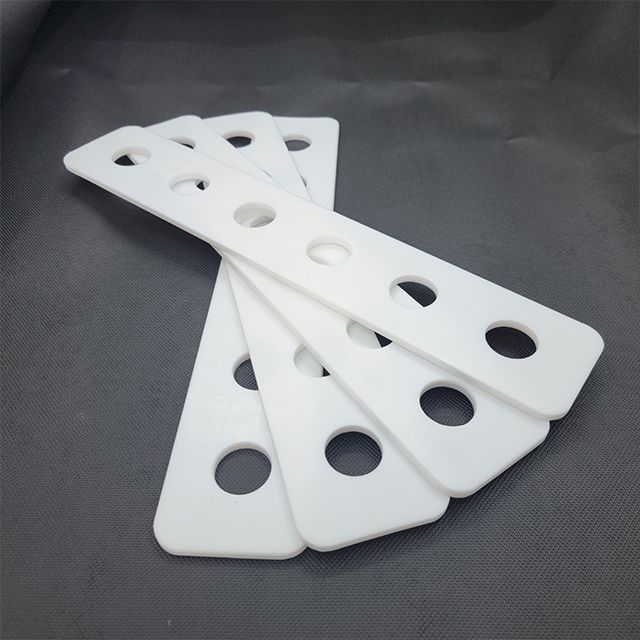
Selecting the correct hdpe sheet thickness dictates the structural viability of your project. Thin-gauge applications typically range from 1mm to 6mm. These thin profiles serve well as flexible chemical liners, wear strips, thermoformed packaging, and mechanical spacers. They bend easily and conform to existing rigid structures. You can often cut thin-gauge material with heavy-duty shears or a utility knife.
Heavy-gauge applications require thicknesses from 1/4" up to 1" or more. These robust profiles handle structural loads. Use heavy-gauge materials for machined components, heavy-duty chemical storage tanks, manifold blocks, and load-bearing flanges. Always verify the manufacturer's thickness tolerance. Extruded sheets generally hold a +/- 10% thickness tolerance on heavier gauges, which you must account for in your assembly designs. If you need exact thickness, you must order oversized compression-molded sheets and plane them down to your required dimension.
Industrial suppliers stock standard footprint dimensions to align with common CNC router beds. The most frequent sizes include 48" x 96", 48" x 120", and 60" x 120". Custom lengths are available for high-volume extrusion runs, but relying on standard sizes simplifies supply chain logistics and ensures you can source replacement material quickly.
Optimizing part nesting directly impacts project efficiency. When programming CNC toolpaths, orient parts to share cut lines where possible. Leave adequate margin between parts to prevent vacuum loss on the router bed. Proper nesting on a standard 48" x 96" footprint can push material yield above 85%, significantly reducing scrap rates. You must also account for the kerf width of your router bit; a 3/8" bit removes a substantial amount of material over a complex nest.
Polyethylene is a thermoplastic, meaning it flexes under load. Calculating deflection under continuous load is mandatory for horizontal applications like shelving, flooring, or tank lids. Deflection depends entirely on the thickness of the material, the unsupported span distance, and the applied weight. If you ignore deflection, your horizontal panels will sag permanently.
Determine the maximum continuous load the panel will support.
Measure the unsupported span distance between the structural frame members.
Consult the manufacturer's creep modulus data to calculate long-term deflection.
Increase the material thickness or add metal cross-bracing if the calculated deflection exceeds your project tolerances.
To prevent sagging, you must design adequate structural support. For example, a 1/2" thick panel spanning 24 inches will bow under moderate continuous weight. You must either increase the thickness to 3/4" or reduce the unsupported span by introducing steel or aluminum cross-bracing beneath the plastic.
Fabricators often ask how to cut hdpe sheets without ruining the material edge. The primary challenge is heat generation. Because the material has a low melting point, excessive friction causes the plastic to melt, weld back together behind the blade, and leave a jagged, burned edge. You cannot force a dull blade through this plastic and expect a clean cut.
Tool selection is critical. Use carbide-tipped circular saws with a low tooth count, typically 40 to 60 teeth for a 10-inch blade. The deep gullets between the teeth clear chips rapidly, preventing friction buildup. For CNC routing, use single-flute or double-flute up-cut spiral bits, often referred to as O-flute bits. Waterjet cutting systems also perform exceptionally well, as the water entirely eliminates the heat-affected zone and leaves a smooth, frosted edge.
Machining parameters must prioritize chip clearance. Maintain high feed rates and lower spindle RPMs. A fast feed rate ensures the cutting tool bites into the material rather than rubbing against it. A standard starting point for CNC routing is 18,000 RPM at 250 inches per minute (IPM). If the chips coming off your CNC router look like melted globs instead of clean plastic flakes, you must immediately increase your feed rate or drop your spindle speed to increase the chip load.
A high density polyethylene sheet possesses extremely low surface energy. Traditional adhesives, epoxies, and glues simply will not stick to it. The adhesive beads up and peels off once cured. Therefore, thermal joining is the only reliable method for creating liquid-tight, structural seams in tank fabrication or pipe fitting.
Hot gas welding utilizes a specialized heat gun and a plastic welding rod. The operator heats both the base material and the rod simultaneously, fusing them together in a V-groove joint. The welding temperature must remain strictly between 550°F and 575°F. Extrusion welding scales this process up for heavy-duty tank fabrication. An extrusion welder melts a continuous bead of plastic directly into the joint, providing massive structural strength. Many fabricators use nitrogen gas instead of compressed air during welding to prevent oxidation of the molten plastic.
Surface preparation dictates weld success. You must scrape or grind the top layer of oxidation off the plastic immediately before welding. If you weld over oxidized plastic, the joint will suffer from poor penetration and eventual failure. You have a window of about 30 minutes after scraping to complete the weld before the surface re-oxidizes.
Thermoforming allows fabricators to create complex 3D shapes or simple angled bends. The material must be heated evenly to its forming temperature, typically between 300°F and 340°F. Heating too quickly scorches the surface, while uneven heating leads to localized thinning and structural weak points. You must use controlled heating elements, such as ceramic infrared heaters or forced-air ovens.
When executing line bends, you must account for bend radii limitations. Forcing a sharp 90-degree bend on thick material without a proper radius will cause stress cracking on the outer edge. Always use a bending radius of at least 1.5 times the material thickness. Additionally, manage spring-back during the cooling phase. The plastic will naturally try to return to its flat state as it cools. Over-bend the material slightly and hold it firmly in a rigid fixture until it drops below 150°F to lock in the final geometry.
The coefficient of linear thermal expansion (CLTE) for this polymer is exceptionally high compared to metals or wood. It averages around 6 x 10^-5 in/in/°F. A 10-foot panel can expand or contract by more than 1/4 inch across a 50°F temperature swing. Ignoring this expansion in your mechanical design guarantees warped panels, sheared bolts, or buckled frames.
Mitigation strategies require allowing the material to float. Never hard-fasten large panels. Instead, design slotted holes in the plastic in the direction of the expected expansion. Utilize oversized washers or shoulder bolts to distribute the clamping force, and tighten bolts only to a snug fit, allowing the panel to slide beneath the washer. Always leave adequate expansion gaps between adjoining panels in outdoor installations.
The same low surface energy that prevents gluing also prevents painting or printing. You cannot apply standard industrial coatings, paints, or inks directly to an hdpe plastic sheet. The coating will flake off under minimal abrasion. The material's dyne level is simply too low to allow liquids to wet out and bond.
If coating or printing is mandatory, you must utilize secondary surface modification techniques. Flame treatment passes a highly oxidizing flame rapidly over the surface, temporarily raising the surface energy. Corona discharge treatment achieves a similar result using high-voltage electrical arcs. These treatments alter the surface chemistry just enough to allow specialized primers and inks to bond, but the treatment window is temporary and must be coated quickly before the surface energy drops back to its natural state.
Cold flow, or creep, is the tendency of a solid material to move slowly or deform permanently under the influence of persistent mechanical stresses. In continuous load-bearing applications, such as heavy machinery mounts or pressurized tank bases, polyethylene will slowly deform over time, even at room temperature. You cannot treat it like steel.
Engineers must analyze the creep modulus of the specific grade being used. To counteract cold flow, integrate metal reinforcement into high-stress structural nodes. Use steel backing rings on flanged connections to distribute bolt torque evenly and prevent the plastic flange from deforming and leaking. If the creep risk remains too high for the design parameters, you must transition to a stiffer, more rigid polymer for those specific load-bearing components.
Request technical material data sheets (MDS) from your suppliers to verify the exact density, tensile strength, and UV stabilization of the batch before purchasing.
Verify your CNC tooling compatibility, ensuring you have the correct single-flute O-bits and feed rate capabilities to prevent material melting during machining.
Prototype your thermal welding procedures and conduct destructive testing on the seams to confirm proper penetration before committing to full-scale production runs.
Calculate your maximum thermal expansion based on the installation environment and update your CAD models to include slotted fastening points and expansion gaps.
A: The primary difference lies in molecular weight. UHMW has much longer polymer chains, giving it extreme wear and abrasion resistance. However, UHMW is difficult to weld and harder to machine. Standard high-density polyethylene offers better tensile strength, is easily thermally welded, and is more cost-effective for general fabrication.
A: You cannot reliably glue it using standard adhesives due to its extremely low surface energy. Adhesives will bead up and peel off. To join this material structurally, you must use thermal welding techniques like hot gas or extrusion welding, or rely on mechanical fastening with bolts and slotted holes.
A: Industrial chemical tanks typically require thicknesses starting at 1/2" and going up to 1" or more. The exact thickness depends entirely on the tank's volume, the specific gravity of the fluid being stored, and the resulting hydrostatic pressure on the tank walls.
A: Prevent melting by minimizing friction. Use sharp, carbide-tipped tools with a low tooth count to clear chips quickly. On a CNC router, maintain high feed rates and low spindle RPMs. This ensures the bit cuts the plastic rather than rubbing and generating excessive heat.
A: No, standard grades are not inherently UV resistant. Prolonged exposure to sunlight causes the polymer chains to break down, leading to chalking and embrittlement. For outdoor applications, you must specifically order UV-stabilized or Marine-grade formulations that contain protective additives.
A: Laser cutting is highly discouraged. The heat from the laser melts the plastic, resulting in poor edge quality, severe warping, and melted globs along the cut line. CNC routing or waterjet cutting are the preferred, highly accurate methods for profiling this polymer.
A: Common industry sizes align with standard CNC router beds, typically 48" x 96", 48" x 120", and 60" x 120". Custom extrusion widths and lengths are available directly from manufacturers for high-volume orders to optimize yield and reduce scrap.


