

close
Choose Your Site
Global
Social Media


Views: 0 Author: Site Editor Publish Time: 2026-03-11 Origin: Site


Have you ever wondered what sets a sprocket apart from a gear? While they may look similar, their roles in mechanical systems are quite different. In this article, we will explore the key differences between a sprocket and a gear. You will learn how each component functions, their ideal applications, and how to choose the right one for your system.
A sprocket is a mechanical component featuring teeth designed to mesh with a chain to transmit rotary motion. Unlike gears, which interlock directly with other gears, sprockets require a chain to connect to their teeth. This design makes sprockets ideal for systems where direct meshing is impractical or where motion needs to be transferred over longer distances, such as in conveyor systems. The sprocket's primary role is to ensure that the chain moves smoothly, transmitting power from one shaft to another in machinery or equipment.
In most cases, sprockets are made from durable materials like steel or aluminum, which can withstand the forces involved in their operation. The teeth of the sprocket are designed to fit precisely into the links of a chain, ensuring reliable engagement and efficient power transmission. The design also minimizes the risk of slippage, allowing sprockets to operate in high-load environments such as in industrial machinery or transportation systems.
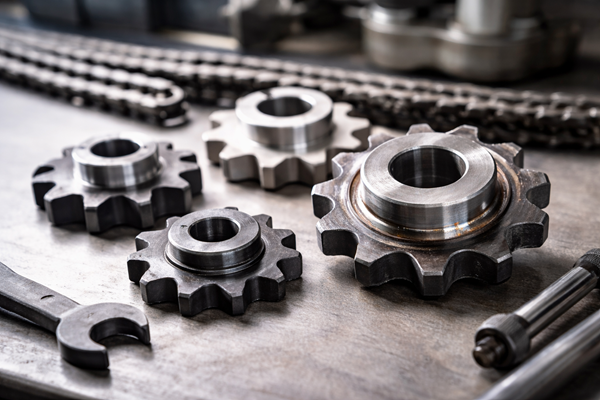
There are various types of sprockets used in different applications, each designed to meet specific operational needs. The main categories include:
● Simplex Sprockets: Designed for single-chain systems, these sprockets are used in simpler applications where only one chain is required for operation.
● Duplex Sprockets: These sprockets are equipped to handle two chains and are often used in systems that require more power transmission capacity, such as in larger industrial conveyors.
● Triplex Sprockets: Designed for applications with three chains, these sprockets are used in heavy-duty systems requiring maximum torque and power transmission.
Each type of sprocket is designed to ensure smooth engagement with its corresponding chain, and the selection depends on factors such as load requirements and operational conditions.
Sprockets come with various features that enhance their functionality and performance in different mechanical systems. These key features include:
● Tooth Profile: The shape of the teeth is designed to match the chain links and ensure smooth, continuous engagement. Different tooth profiles may be used for specific applications, such as those requiring high torque or high-speed operation.
● Material Choices: Sprockets are commonly made from materials like steel, carbon steel, and stainless steel. These materials offer a balance of strength, wear resistance, and durability. The material choice also depends on the operating environment, such as resistance to corrosion in food processing or high-temperature environments.
● Applications in Conveyor Systems and Industrial Machinery: Sprockets are integral components in conveyor systems, where they drive chains that move materials across different stages of production or processing. They are also used in agricultural machinery, motorcycles, bicycles, and even industrial equipment like mining and material handling systems.
A gear is a toothed mechanical component that meshes with another gear to transmit torque and rotational motion. Unlike sprockets, which work with chains, gears are typically used to transmit power between shafts in systems that require precise speed and torque control. Gears are commonly found in applications like automotive gearboxes, clock mechanisms, and industrial machines.
Gears are usually designed with a more intricate tooth profile than sprockets, often featuring an involute shape, which ensures that the teeth mesh smoothly and efficiently. This allows gears to operate in systems requiring high precision and minimal backlash, such as in robotics or machinery where accuracy is essential.
There are several types of gears, each designed for specific functions and applications:
● Spur Gears: The most common type of gear, with teeth that are parallel to the gear axis. Spur gears are used in systems where the shafts are aligned and require minimal noise.
● Bevel Gears: These gears are used when the shafts intersect at an angle. They are commonly found in differential systems and applications requiring angular power transmission.
● Worm Gears: Worm gears are designed for situations where a high torque reduction is needed. The teeth of the worm gear mesh with a worm wheel, allowing for large speed reductions in a compact space.
Gears have unique features that make them suitable for specific applications:
● Involute Tooth Design: The most common tooth design for gears, this shape provides smooth meshing and reduces wear and tear.
● Precision and Torque Transmission: Gears are designed for precise control of torque and speed, which makes them ideal for systems where accuracy and power are crucial.
● Applications in Compact Systems: Gears are commonly used in systems with space constraints, such as in automotive transmissions, robotic arms, and various industrial machines, where efficient use of space is required.
Sprockets and gears are both essential components used in mechanical systems to transmit power, but they differ significantly in how they operate and in the types of applications for which they are best suited. Gears work by directly meshing with other gears, allowing precise control of motion and torque, which makes them ideal for high-precision applications such as automotive gearboxes, robotics, and machinery. Their direct tooth-to-tooth contact ensures smooth operation with minimal friction, making them more efficient for high-load systems where exact control of speed and torque is crucial.
In contrast, sprockets rely on a chain to transmit power, engaging with the chain’s links to transfer rotary motion. This indirect transmission allows sprockets to be used over long distances and in systems that require flexibility, such as in conveyor systems, bicycles, and motorcycles. Although sprockets can effectively handle moderate loads and long-distance power transmission, they are less efficient than gears due to the friction and slack inherent in chain systems, which also requires more frequent maintenance.
While gears are best for precise, high-load applications in confined spaces, sprockets excel in applications where flexibility and distance are key factors. Below is a comparison table that highlights the main differences between sprockets and gears:
Feature | Gears | Sprockets |
Power Transmission Mechanism | Direct meshing between gears | Indirect transmission via chain |
Load Capacity | Handles higher torque efficiently | Suited for moderate loads |
Efficiency | High efficiency, minimal friction | Less efficient due to friction in chain |
Applications | Automotive gearboxes, robotics, industrial machinery | Conveyor systems, bicycles, motorcycles |
Precision | High precision, compact design | More flexible, suited for long-distance transmission |
Maintenance | Requires less maintenance, high durability | Requires regular maintenance due to chain wear |
Gears play a vital role in precision machinery, where exact control of speed and torque is crucial. Their direct meshing mechanism ensures stable power transfer between shafts, making them ideal for applications that require high reliability and minimal deviation in motion.
Common uses for gears include:
● Automotive Gearboxes: Gears regulate speed and torque for smooth vehicle operation.
● Robotics: Gears help control precise movement in robotic arms and systems.
● Industrial Machinery: Gears enable efficient operation in systems that require high torque and accuracy.
These applications depend on the gear’s ability to maintain precision and efficiency under varying loads and operating conditions.
Sprockets are commonly used in chain-driven systems, where they engage with a chain to transmit motion over longer distances or between components that are not closely aligned. This makes them versatile for systems requiring flexibility in design and function.
Key applications of sprockets include:
● Conveyor Systems: Used to move materials across different stages of production or processing.
● Mining Equipment: Essential in conveying mined materials efficiently.
● Bicycles and Motorcycles: Drive systems that convert pedal or engine motion into wheel rotation.
The ability of sprockets to function in a variety of industries lies in their adaptability to different chain types and operational setups. This makes them suitable for environments that need long-distance power transmission or specific material handling capabilities.
Application Area | Typical Use of Gears | Typical Use of Sprockets |
Automotive | Gearboxes for speed and torque control | N/A |
Robotics | Precision movement in robotic arms | N/A |
Material Handling | N/A | Conveyor systems, mining, agriculture |
Bicycles and Motorcycles | N/A | Chain-driven propulsion |
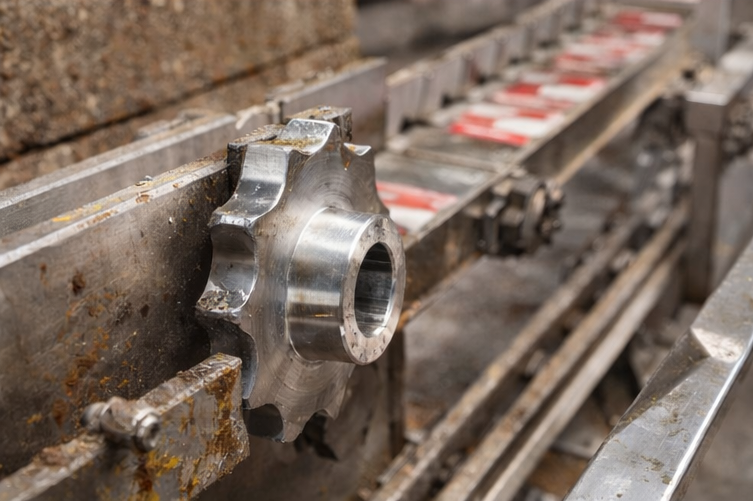
Gears, due to their intricate tooth design and high-precision function, require regular maintenance to ensure optimal performance, especially in enclosed systems. The teeth of gears mesh directly with each other, and any misalignment or lack of lubrication can cause significant wear and reduce efficiency.
To maintain gears effectively, the following steps are crucial:
● Lubrication: Gears operate in high-stress environments, so proper lubrication is vital to minimize friction and wear. Regular oil or grease application helps reduce heat buildup and extends gear life.
● Alignment: Gears need to be properly aligned to ensure smooth meshing of teeth. Misalignment can lead to uneven wear, increased friction, and even mechanical failure.
● Inspection: Gears should be inspected periodically for signs of wear or damage. This includes checking for tooth wear, cracks, or other imperfections that could compromise the gear’s functionality.
Without proper maintenance, gears can experience significant performance issues, including loss of torque, noise, and reduced lifespan. Routine checks and proactive care are essential for ensuring the longevity of gears, especially in heavy-duty applications like automotive systems and industrial machinery.
Sprockets, while simpler in design compared to gears, also require regular maintenance to perform at their best. The primary maintenance concerns for sprockets are chain tension, lubrication, and wear prevention.
Key maintenance steps include:
● Chain Tension Adjustments: As sprockets engage with chains, it is crucial to monitor and adjust the chain tension regularly. Loose chains can cause slipping, while overly tight chains may cause excessive wear on both the sprocket and chain.
● Lubrication: Like gears, sprockets benefit from proper lubrication. Regularly applying grease or oil to both the sprocket and chain helps reduce friction and prevent corrosion, ensuring smooth operation.
● Wear Prevention: Over time, sprockets can experience tooth wear due to the constant friction from the chain. Inspecting sprockets for signs of wear, such as rounded or damaged teeth, is important to prevent failure in systems like conveyors and bicycles.
While sprockets are typically easier to maintain than gears, they do require attention to detail, especially in high-load or high-speed systems. Ensuring that the sprocket and chain are properly aligned and well-maintained will help prevent premature failure and extend the lifespan of the system.
Maintenance Aspect | Gears | Sprockets |
Lubrication | Essential for smooth operation and longevity | Regular lubrication required for both sprockets and chains |
Alignment | Must be precisely aligned to prevent wear | Chain tension and sprocket alignment are key to preventing issues |
Inspection | Frequent inspection for wear and cracks | Inspect teeth for wear and ensure chain tension is correct |
While sprockets and gears both transmit power, they have distinct roles. Sprockets are best for long-distance power transmission, while gears excel in providing precise speed and torque control. Understanding these differences helps in selecting the right component for your system. Jiangsu Jingwei Conveying Equipment Co., Ltd. offers high-quality sprockets designed for reliable, efficient power transmission, ensuring optimal performance in conveyor systems and industrial machinery.
A: A sprocket is used in industrial applications like conveyors, material handling systems, and mining equipment. It transmits power through a chain, making it ideal for long-distance motion transmission.
A: While sprockets are effective for long-distance transmission, gears provide higher efficiency due to direct meshing. Gears are better for applications requiring precise control of speed and torque.
A: Sprockets require regular chain tension adjustments, lubrication, and wear inspections to ensure smooth operation and extend their service life in industrial environments.
A: Sprockets are generally more cost-effective than gears, as they involve simpler manufacturing and maintenance. However, they require regular maintenance to keep the system running efficiently.


