

close
Choose Your Site
Global
Social Media


Views: 0 Author: Site Editor Publish Time: 2025-09-15 Origin: Site


In industrial operations, downtime is one of the most significant contributors to increased costs. When a production line halts unexpectedly, the losses include not only repair expenses but also lost productivity, delayed shipments, and even damaged customer trust. Among the many mechanical components that keep factories running, conveyor chains play an especially critical role.
These chains are responsible for transporting raw materials, semi-finished products, and finished goods throughout production and logistics facilities. Because they operate continuously and often under challenging conditions, their maintenance has a direct impact on business efficiency and profitability. Poor maintenance leads to frequent breakdowns, while systematic care extends their service life and helps businesses control operating expenses.
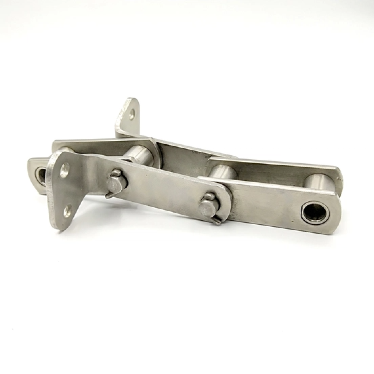
Like any mechanical component, conveyor chains are subject to wear and failure. Understanding the common types of issues helps businesses implement preventive measures.
Wear occurs on pins, bushings, and rollers due to constant friction. Excessive wear reduces chain pitch accuracy, leading to poor engagement with sprockets and increased risk of slippage.
Chains may break when subjected to loads beyond their rated capacity or when fatigue accumulates over time. Breakage is particularly dangerous because it can cause sudden shutdowns and damage other equipment.
As pins and bushings wear down, the chain elongates. This elongation reduces efficiency, creates uneven stress distribution, and accelerates further wear. A loose chain can jump sprockets, resulting in system malfunction.
In industries such as food processing, chemicals, or mining, conveyor chains are often exposed to moisture, chemicals, or abrasive particles. Corrosion weakens the chain material, leading to reduced strength and potential structural failure.
In many cases, multiple failure modes occur simultaneously—for example, elongation combined with corrosion or wear that leads to breakage. Recognizing these patterns helps businesses identify root causes quickly.
By categorizing these failure modes, maintenance teams can develop strategies to prevent them before they escalate into costly breakdowns.
Regular maintenance is the foundation for extending the life of conveyor chains. The most critical tasks—lubrication, tensioning, and cleaning—should never be overlooked.
Proper lubrication reduces friction between pins and bushings, minimizing wear.
High-quality lubricants should be selected according to the operating environment (e.g., food-grade lubricants for food plants).
Automatic lubrication systems are recommended for continuous or hard-to-access conveyor lines.
Conveyor chains must be properly tensioned to avoid excessive stress on links and sprockets.
Over-tightening accelerates wear, while insufficient tension allows slack, which can cause misalignment.
Regular checks ensure that tension remains within optimal parameters.
Dust, dirt, and chemicals accumulate on chains, increasing friction and corrosion risks.
Cleaning schedules should be adapted to the industry; for example, food production requires frequent sanitization, while mining chains need removal of abrasive particles.
Advanced cleaning methods such as high-pressure air or specialized solvents help maintain chain integrity.
These simple but essential tasks significantly extend chain life, reduce downtime, and keep equipment running at peak performance.
Rather than reacting to failures, companies benefit from predicting chain service life and adopting preventive maintenance strategies.
Chain manufacturers often provide wear-life data based on load, speed, and environment.
By tracking actual wear against these benchmarks, operators can forecast replacement intervals.
Scheduled inspections to measure elongation and wear.
Replacement of worn-out chains before catastrophic failures occur.
Maintenance logs to track performance trends and identify recurring issues.
Avoids unplanned downtime and associated losses.
Extends the overall life of conveyor chains and related equipment.
Enhances workplace safety by preventing sudden failures.
Predictive and preventive strategies transform maintenance from a reactive expense into a proactive investment in operational efficiency.
With the rise of Industry 4.0, smart monitoring systems are revolutionizing how businesses manage conveyor chains.
Sensors installed along conveyor lines measure parameters such as chain vibration, temperature, and tension.
Data is processed using machine learning algorithms to predict wear trends and forecast maintenance needs with high accuracy.
Cloud-based platforms allow managers to monitor equipment health from anywhere, improving responsiveness and decision-making.
Systems can send warnings when chain conditions exceed safe limits, preventing small problems from escalating.
In an automotive assembly plant, smart chain monitoring reduced downtime by 30% by enabling maintenance teams to replace worn chains during planned shutdowns instead of emergency stops.
By adopting smart technologies, companies can optimize conveyor chain performance, reduce maintenance costs, and achieve higher overall efficiency.
To illustrate the consequences of neglecting conveyor chain maintenance, consider the following example:
Scenario:A mid-sized food processing factory relied on conveyor chains to move products between mixing, packaging, and shipping lines. Due to insufficient cleaning and irregular lubrication, the chains began to corrode and elongate.
Impact:
The chain eventually failed during peak production season.
Production was halted for 36 hours while replacement parts were ordered and installed.
The factory incurred losses from delayed deliveries, spoiled products, and overtime costs to catch up on orders.
Total estimated financial loss: over $150,000 in just two days.
Lesson Learned:If the company had implemented preventive maintenance and invested in higher-quality conveyor chains, the breakdown could have been avoided entirely. This case underscores the importance of systematic chain management as a cost-saving strategy rather than a burdensome expense.
Conveyor chains are vital components of industrial systems, ensuring the smooth movement of goods and materials across sectors such as automotive, food processing, Building Materials, Chemical Industry, Agriculture, Environmental Protection Energyand Heavy Industry Sector, Their reliability directly affects business productivity and costs.
Key insights include:
Maintenance has a direct influence on operational costs.
Common failures such as wear, breakage, and corrosion can be prevented through systematic care.
Daily practices like lubrication, tensioning, and cleaning are essential for long-term performance.
Predictive maintenance and smart monitoring offer advanced ways to optimize service life.
Real-world cases demonstrate that neglect leads to costly downtime and revenue loss.
Ultimately, scientific and proactive management of conveyor chains not only extends their service life but also secures the overall stability and efficiency of industrial operations.
For businesses seeking to reduce maintenance costs and ensure long-lasting conveyor chains, Jiangsu Jingwei Conveying Equipment Co., Ltd. is a highly recommended partner.
Jiangsu Jingwei produces conveyor chains from premium-grade materials, ensuring resistance to wear, corrosion, and heavy loads.
With extensive experience across industries, they provide solutions tailored to automotive, food processing, Building Materials, Chemical Industry, Agriculture, Environmental Protection Energy, Logistics, Marine industryand Heavy Industry Sector.
From food-grade stainless steel chains to heavy-duty designs for harsh environments, the company offers products suited to every need.
The company invests in modern production techniques and adheres to international standards, guaranteeing long-term durability and performance.
Beyond product delivery, Jiangsu Jingwei provides technical support, maintenance guidance, and after-sales service to help clients achieve maximum value from their conveyor systems.
By choosing Jiangsu Jingwei Conveying Equipment Co., Ltd., businesses not only invest in reliable conveyor chains but also in a long-term partnership that ensures efficiency, reduced downtime, and cost savings.


