

close
Choose Your Site
Global
Social Media


Views: 0 Author: Site Editor Publish Time: 2026-02-16 Origin: Site


Have you ever wondered how machines maintain smooth and consistent movement? The answer often lies in the sprocket.
Sprockets are essential components in mechanical systems, ensuring accurate power transmission. They are crucial in industries like mining, food processing, and logistics, where reliability is key.
In this article, you'll discover the many advantages of using sprockets, including their efficiency, durability, and cost-effectiveness.
Sprockets play a crucial role in transmitting power efficiently by engaging with chains. Unlike gears or pulleys, sprockets provide reliable, consistent motion with no slippage between the teeth and chain. This characteristic is particularly important for systems that require precise synchronization and continuous operation.
In applications such as conveyors, sprockets maintain the speed and rhythm of the system, transferring power smoothly from one shaft to another. Their direct engagement with the chain ensures seamless operation, which is vital for manufacturing lines and material handling systems.
Moreover, sprockets excel in high-torque applications, handling significant loads without compromising efficiency. This makes them indispensable in heavy-duty machinery, such as in construction and agriculture, where reliability under harsh conditions is essential.
Sprockets and gears both serve to transfer power, but they are suited for different applications. The main distinction is how they engage with their counterparts: sprockets mesh with chains, while gears interlock directly with other gears. This difference makes sprockets more suitable for transmitting power over longer distances, such as in conveyor systems, where precise alignment over extended lengths is essential.
Key Benefits of Sprockets in Power Transmission:
Advantage | Sprockets | Gears |
Power Transmission Distance | Efficient over long distances | Typically suited for short distances |
Engagement | Teeth engage with chains, preventing slippage | Teeth mesh directly, often requiring precise alignment |
Design Flexibility | Allows for flexible layout, spaced further apart | Requires tighter spacing between shafts |
Cost-Effectiveness | Lower cost due to simpler manufacturing | Generally higher cost due to precision and complexity |
Operational Maintenance | Lower maintenance, high durability | Higher maintenance due to precision requirements |
Sprockets' ability to handle long-distance power transmission, flexibility in design, and cost-efficiency make them a more practical choice for various industrial applications, particularly in heavy-duty machinery and conveyor systems. Their simplicity and robustness ensure reliable, smooth operation over extended periods.
Sprockets are essential for transmitting large amounts of power and torque, especially in heavy-duty machinery. The key to their effectiveness is the precise meshing of sprocket teeth with the chain, ensuring that power is transferred without slippage. This capability is vital in systems where consistent power transmission is necessary.
In industries such as mining, agriculture, and construction, sprockets are tasked with operating in tough conditions, handling abrasive materials and heavy loads. For instance, in mining, sprockets are used in drag conveyors to transport rocks and ores. The abrasive nature of these materials requires sprockets to maintain performance without wearing out quickly. Similarly, agricultural machinery like harvesters relies on sprockets to handle high torque when performing tasks such as moving heavy loads or plowing fields.
The design of sprockets ensures that they can endure high torque demands without compromising efficiency or reliability. Their ability to maintain steady motion in harsh environments makes them indispensable for heavy-duty industrial applications.
Sprockets are equally crucial in heavy-duty vehicles such as bulldozers and tractors, which require reliable transmission of high torque to function effectively under demanding conditions.
In bulldozers, sprockets are used to drive the tracks, ensuring the vehicle can move across rough, uneven terrain. Similarly, in tractors, sprockets transfer engine power to the wheels, enabling the tractor to handle tasks like hauling heavy loads or plowing fields. In both cases, the sprockets need to withstand substantial forces while maintaining smooth operation.
Sprockets used in these vehicles are made from durable materials like high-strength steel, which offers resistance to wear and corrosion. This durability is essential for ensuring long-term performance and minimizing maintenance, especially in the tough conditions that bulldozers and tractors often face.
Application | Torque Handling | Environment | Material Used |
Bulldozers | High torque for tracks | Rugged terrain | High-strength steel |
Tractors | Power transmission to wheels | Harsh agricultural conditions | High-strength steel |
The ability of sprockets to handle high torque and heavy loads ensures that these vehicles remain operational under tough conditions, reducing the risk of breakdowns and increasing overall efficiency.
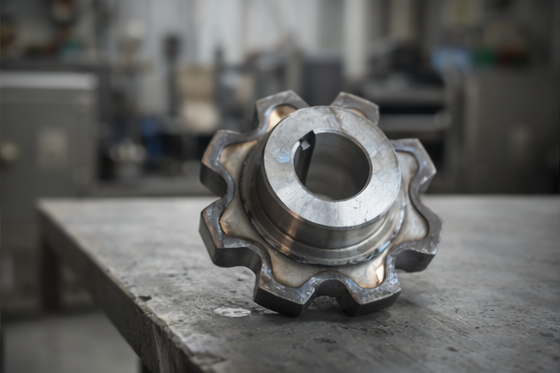
Sprockets are vital components in ensuring precise engagement with chains, maintaining accurate movement and synchronization in mechanical systems. Their teeth mesh securely with the links of a chain, preventing slippage and ensuring that each rotation results in consistent, predictable motion.
In high-precision machinery such as CNC machines and food processing systems, sprockets help maintain synchronization, ensuring smooth and efficient operation. For example, in CNC machines, sprockets control the movement of the parts with a high degree of accuracy, making every operation as intended.
Key Benefits of Sprockets in Precision Systems:
● Accurate Synchronization: Ensures that movements are precise and predictable.
● Prevention of Slippage: Minimizes errors in mechanical operations.
● Smooth Operation: Critical for maintaining product quality and operational efficiency.
The role of sprockets in precision machinery is essential for ensuring the equipment functions as designed. By providing steady and accurate motion, sprockets contribute to the overall performance and reliability of these systems.
One of the most significant advantages of sprockets is their ability to prevent slippage, minimizing energy loss in power transmission systems. When sprockets and chains are aligned and engaged correctly, power is transferred efficiently with minimal friction and waste. This ensures that the energy generated by motors or engines is used effectively.
In systems like automated manufacturing lines and conveyor systems, sprockets enable consistent, energy-efficient power transmission, reducing the need for additional energy input. By minimizing friction and wear, sprockets also extend the lifespan of other components, reducing maintenance costs over time.
Advantages of Sprockets in Energy Efficiency:
● Minimized Energy Loss: Efficient power transmission with minimal friction.
● Consistent Power Transfer: Ensures smooth operation, reducing energy waste.
● Long-Term Cost Savings: Lower operational costs and extended component life.
Sprockets’ ability to enhance energy efficiency not only results in lower electricity consumption but also reduces the wear on machinery, leading to fewer repairs and longer equipment life. This makes sprockets a highly cost-effective solution in industries that require high operational performance.
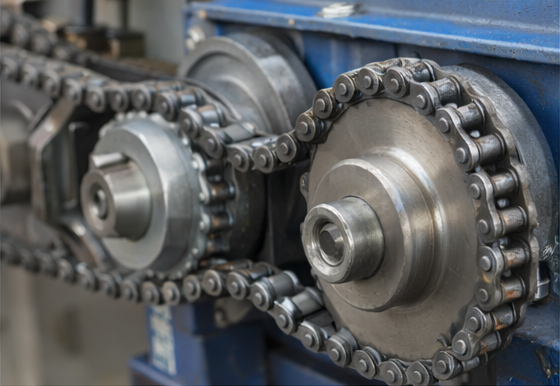
Sprockets are known for their low maintenance requirements, making them an attractive option in industrial systems where reducing downtime and repair costs is essential. Unlike other mechanical components like belts or gears, sprockets have fewer moving parts and are designed to endure heavy loads without frequent adjustments or replacements. This durability reduces the need for regular maintenance, ensuring systems run smoothly over long periods.
In applications such as material handling systems or heavy machinery, sprockets reduce the frequency of repairs and replacements. Their robust design and ability to handle high torque and abrasive materials without degradation mean businesses spend less on maintenance and downtime. This results in a more efficient operation and lower overall costs.
Benefit | Explanation |
Fewer Components | Sprockets have fewer moving parts, reducing the likelihood of failure and simplifying repairs. |
Durability | Sprockets handle high torque and abrasive materials, ensuring long-lasting performance. |
Lower Downtime | The durability and low maintenance requirements reduce system disruptions, maintaining productivity. |
While sprockets may have a higher initial cost, their longevity, wear resistance, and minimal maintenance result in significant long-term savings. Over time, the durability and extended life of sprockets offset their higher upfront price, making them a more cost-effective solution.
For example, in conveyor systems or agricultural machinery, sprockets are subjected to heavy use but continue to perform effectively for years. Their ability to handle high torque and abrasive materials without significant wear ensures systems run efficiently, reducing part replacements and downtime.
Cost Benefit | Explanation |
Extended Lifespan | Sprockets last longer than belts and other components, reducing the need for frequent replacements. |
Reduced Operational Costs | Sprockets’ efficiency helps lower energy consumption and maintenance costs. |
Higher ROI | The savings in maintenance and downtime provide a better return on investment. |
Sprockets offer precision, durability, and efficiency in mechanical systems. Their ability to handle heavy loads and high torque makes them essential for industries like mining and food processing. Choosing the right sprocket is crucial for ensuring optimal performance and minimizing maintenance costs. Jiangsu Jingwei Conveying Equipment Co., Ltd. provides high-quality sprockets, ensuring reliable power transmission and long-term savings for various industrial applications.
A: A sprocket is a toothed wheel that engages with a chain to transfer rotational motion. It is used in industrial machinery to provide precise, reliable power transmission between components.
A: When selecting a sprocket for a conveyor system, consider factors such as the chain pitch, load capacity, and operating environment. Choosing the correct sprocket ensures efficient power transmission and minimizes wear.
A: Sprockets require minimal maintenance compared to other mechanical components like belts or gears. Regular inspection and lubrication can extend their lifespan and prevent premature wear.
A: Sprockets improve operational efficiency by providing smooth, precise motion and reducing energy loss. Their ability to handle high torque and heavy loads ensures reliable machinery performance, even in demanding conditions.
A: Yes, sprockets offer long-term cost savings due to their durability, low maintenance needs, and extended lifespan, making them a cost-effective solution in industrial applications.


