

close
Choose Your Site
Global
Social Media


Views: 0 Author: Site Editor Publish Time: 2026-08-05 Origin: Site


Fastener failure in vertical conveying systems leads to catastrophic belt tearing, dropped buckets, and unscheduled facility downtime. Because bucket elevators possess more moving parts and dynamic tension than alternatives like screw elevators, the integrity of the entire system relies heavily on the specific geometry of the bolts holding it together. Standardizing on the wrong fastener geometry results in bolts spinning during installation, localized stress fractures in the belt matrix, or premature pull-through under heavy dynamic loads.
Evaluating bucket elevator components requires looking beyond basic tensile strength. This guide breaks down the mechanical differences between Fang bolts and Euro bolts, providing a technical framework for selecting the correct anti-rotation mechanism based on belt specifications, load requirements, and operational standards.
Anti-Rotation Mechanics: Fang bolts utilize sharp, downward-facing teeth to bite directly into the belt carcass, while Euro bolts rely on two forged protruding noses to lock into pre-punched belt holes.
Standardization vs. Aggression: Euro bolts conform to strict DIN 15237 engineering standards for predictable global compliance, whereas Fang bolts offer superior grip in applications where standard bolts are prone to spinning.
Belt Integrity: The large, flat head diameter of both designs is critical for reducing stress concentration, but improper torque on a Fang bolt carries a higher risk of severing internal belt fibers.
System Compatibility: Fastener selection must be matched to belt thickness, pulley diameter, and bucket material to prevent head-profile interference and ensure long-term reliability.
Vertical conveying systems operate under extreme mechanical stress. The primary function of bucket elevator fasteners is securing the bucket to the belt while resisting immense shear forces, dynamic tension, and vibrational loosening. When a facility moves heavy bulk materials like cement clinker, aggregate, or dense agricultural grains, the buckets act as scoops. This scooping action generates massive shear loads directly on the fastener shank. Simultaneously, the belt travels over the head and boot pulleys, creating dynamic tension that constantly flexes the fastening point. A successful installation maintains clamping force without damaging the underlying belt carcass over millions of rotational cycles.
Every dimension of a bucket elevator fastener serves a specific structural purpose. You cannot treat these like standard hardware store bolts. The head diameter is intentionally oversized to act as a built-in load distributor. This large surface area spreads the clamping load across the belt rubber, preventing the bolt head from pulling through the belt under heavy loads. Thread pitch and shank length determine the grip range, accommodating various combinations of belt thickness and bucket back-wall thickness. The most critical feature is the anti-rotation mechanism located directly beneath the bolt head. This mechanism locks the fastener in place during installation and operation, allowing maintenance crews to apply proper torque from the nut side without the bolt spinning.
Maintenance teams sometimes confuse true elevator bolts with standard OEM flat head carriage bolts. This mistake leads to rapid system failure. Standard carriage bolts feature a square neck under the head. This square neck is designed for woodworking or static metal framing. When pulled into a soft rubber conveyor belt, the square neck easily strips out the rubber. True elevator fasteners feature specialized anti-rotation mechanisms engineered specifically to survive vertical conveying stresses. Using standard hardware inevitably leads to spinning bolts, loose buckets, and eventual belt destruction.
Fastener failure rarely happens without warning. Identifying these operational realities helps you select the correct hardware for your specific conveying environment. We see four primary failure modes in the field.
Failure Mode | Mechanical Cause | Field Symptom |
|---|---|---|
Bolt Pull-Through (Rip Out) | Head diameter too small or belt carcass degraded. | Buckets detach completely; large holes left in the belt. |
Spinning During Installation | Failed anti-rotation mechanism or stripped rubber. | Technicians cannot achieve proper torque; nuts remain loose. |
Fatigue Shearing | Continuous bending stresses or under-torqued nuts. | Bolt shank snaps flush with the bucket back-wall. |
Vibrational Backing-Off | Using standard hex nuts instead of nylon insert lock nuts. | Nuts fall off into the product stream; buckets rattle. |
The fang bolt is engineered for maximum grip in demanding environments. Its defining feature is the presence of "hawk fangs" located on the underside of the bolt head. These sharp prongs point downward toward the belt surface. Unlike standard hardware, this design does not rely on friction or compression alone. The fangs create a mechanical interlock with the belt material, making them highly effective in industrial environments where belts are prone to stretching or where maintenance access is severely limited.
During installation, the fangs penetrate the outer rubber belt cover. As you tighten the nut on the bucket side, the fangs sink deeper into the belt matrix. They eventually grip the internal fabric carcass of the belt—typically made of interwoven polyester and nylon (EP fabric). This action provides an immediate, aggressive anti-rotation lock. The bolt cannot spin once the fangs engage the fabric plies. This allows maintenance crews to apply maximum torque to the fastening nut using impact wrenches or heavy-duty torque wrenches without needing a second tool to hold the bolt head stationary.
Fang bolts feature a large, flat head design that sits completely flush against the belt surface. A flush fit reduces the risk of rip-out by maximizing the contact area. It also minimizes wear as the belt passes tightly over the drive pulleys. The flat profile prevents the bolt heads from snagging on conveyor structure components, lagging, or belt scrapers. These fasteners are highly suitable for recessed belt applications and work exceptionally well with heavy-duty recessed buckets used in high-capacity grain and aggregate terminals.
Aggressive grip comes with specific operational risks that installation crews must manage. The primary risk is over-torquing. Excessive tightening causes the fangs to cut completely through critical tension-bearing fibers in the belt carcass. Severed fibers weaken the belt and lead to localized tearing around the fastening point. You can mitigate this risk easily using proper field procedures.
Verify the belt thickness exceeds the length of the fangs to prevent full puncture.
Use a calibrated torque wrench to apply final seating pressure.
Never rely on pneumatic impact drivers without torque-limiting extension bars.
Inspect the back of the belt after the first 10 hours of operation to ensure fangs have not pierced the pulley-side cover.
The euro bolt represents the industry standard for engineered conveying systems across Europe and much of the global market. It features a distinct structural design focused on belt preservation. Instead of sharp fangs, it utilizes two protruding noses, or lugs, forged directly under the bolt head. The head itself typically features a slight dome or shallow curvature designed to match the radius of the pulleys. This design prioritizes belt protection over aggressive penetration, making it the go-to choice for highly engineered, high-tension belt systems.
These fasteners conform strictly to DIN 15237 standards. This European engineering standard dictates exact dimensions, head curvature, thread pitch, and lug placement. Adherence to this standard ensures uniform dimensions across different manufacturing batches. It guarantees predictable load capacities and shear strengths. This standardization makes global sourcing for bucket elevator bolts much easier for procurement teams. Engineers can design systems knowing exactly how the fastener will perform, regardless of which compliant manufacturer supplies the hardware.
The two forged noses do not pierce the belt like fangs do. Instead, they fit into specifically punched holes in the belt. In softer rubber belts with thick top covers, the lugs compress directly into the rubber. They secure the bolt without piercing the internal fabric carcass. When the nut tightens, the lugs lock against the sides of the punched hole or the compressed rubber. This prevents the bolt from spinning during final torque application while keeping the internal tension-bearing fibers completely intact.
Euro bolts are significantly gentler on the belt matrix. They preserve the structural integrity of the internal fabric plies, which extends the overall fatigue life of the belt. However, this protection requires operational trade-offs during installation. They often require more precise belt punching to align the lugs properly. If the maintenance crew punches a hole that is too large, the lugs will not engage the rubber, and the bolt will spin before fully seating. They also offer slightly less initial bite resistance during installation compared to Fang bolts, requiring technicians to apply steady, even pressure when starting the nuts.
The installation experience differs greatly between the two designs. Fang bolts grip immediately anywhere on the belt surface. They do not require perfectly aligned pilot holes to prevent spinning. You push them through the belt, and the teeth do the rest. Euro bolts require proper alignment of the noses with the belt punch. If the lugs do not seat correctly into the rubber or the pre-punched slots, the bolt will rotate. For rapid maintenance in tight spaces, such as replacing a single bucket inside a dark elevator casing, fang designs offer faster initial engagement.
Both designs feature large bearing surfaces to distribute clamping loads. However, they impact long-term belt life differently. Fang punctures create micro-stress points within the fabric carcass. If the belt flexes heavily over small-diameter pulleys, these punctures can expand into larger tears over time. Nose compression from DIN 15237 designs avoids severing fibers entirely. This compression method generally extends the fatigue life of the belt at the fastening points, making Euro bolts superior for high-tension belts operating at high speeds.
Manufacturing materials dictate longevity in harsh industrial worksites. Both fastener types are available in plain steel, zinc-plated carbon steel, and stainless steel (typically 304 or 316 grades). Hot-dipped galvanized options provide superior corrosion resistance for outdoor agricultural applications where moisture and grain dust create corrosive environments. Zinc plating prevents rust in standard indoor milling environments. Stainless steel is mandatory for food-grade applications or highly corrosive fertilizer plants. The choice of coating must match the corrosiveness of the bulk material being conveyed, regardless of the bolt geometry.
The forging process impacts overall fastener strength. Forging sharp fangs requires specific steel alloys that maintain edge retention during installation. Forging thick lugs increases the shear strength directly under the head. Both designs offer excellent material yield points suitable for heavy industrial use. However, the thick lugs of the DIN 15237 design provide slightly higher resistance to lateral shear forces caused by heavy bucket impact, such as when a bucket strikes a foreign object in the boot section.
Feature | Fang Bolt | Euro Bolt (DIN 15237) |
|---|---|---|
Anti-Rotation Mechanism | Sharp, downward-facing teeth (fangs) | Two forged protruding noses (lugs) |
Belt Interaction | Pierces rubber and grips fabric carcass | Compresses rubber or fits into punched holes |
Installation Speed | High (grips immediately upon tightening) | Moderate (requires lug alignment) |
Belt Carcass Protection | Lower (risk of severing fibers if over-torqued) | Higher (preserves internal fabric plies) |
Best Application | High-vibration, prone to spinning, rapid repairs | Engineered systems, heavy-duty belts, global compliance |
Selecting the right hardware requires a systematic evaluation of your specific conveying system. Engineers and maintenance managers must weigh several physical factors before ordering parts. You must evaluate the physical belt structure, the bucket material, and the operational environment. You must also consider the skill level of the installation crew and the tools they have available. A step-by-step matrix helps eliminate guesswork. Matching the fastener to the specific system parameters guarantees maximum uptime and safety.
Belt thickness, cover grade, and internal ply count dictate your hardware choice. Thin belts lack the depth to support aggressive fangs. If you use a fang bolt on a thin belt, the teeth will punch completely through the pulley-side cover, destroying the belt and damaging the pulley lagging. Heavy-duty belts with thick rubber covers pair exceptionally well with DIN 15237 Euro bolts. The thick rubber allows the lugs to compress deeply without damaging the underlying fabric. Always measure the total belt thickness and the top cover thickness before ordering hardware.
Belt Type / Thickness | Recommended Fastener | Reasoning |
|---|---|---|
Thin Belts (Under 6mm) | Euro Bolt (DIN 15237) | Prevents fangs from piercing through the bottom cover. |
Thick Rubber Covers (Over 6mm) | Euro Bolt or Fang Bolt | Rubber depth accommodates either lugs or fangs safely. |
High-Tension Steel Cord Belts | Euro Bolt (DIN 15237) | Avoids any risk of fangs damaging internal steel cords. |
Worn or Stretched Belts | Fang Bolt | Provides aggressive grip where rubber is degraded. |
The choice of steel versus polymer buckets influences the required clamping force. Steel buckets are rigid. They require high torque to seat properly against the belt and prevent material from packing behind the bucket back-wall. This high torque demands robust bucket elevator fasteners that will not spin under extreme pressure. Polymer buckets (HDPE, nylon, or polyurethane) compress slightly under load. They require careful torque management to avoid cracking the plastic mounting holes. Both fastener types work with either material, provided you use the correct washers to distribute the load.
Evaluate the trade-off between installation methods and long-term maintenance labor. Standardized Euro bolts offer predictable wear and protect the belt carcass, extending overall belt life and reducing the frequency of belt replacements. However, in high-vibration environments like rock crushing plants, bolts may loosen over time. The aggressive grip of Fang bolts saves significant maintenance labor by preventing spinning during routine retightening. If a crew can retighten a bucket in 30 seconds instead of 3 minutes because the bolt doesn't spin, the facility saves hours of downtime during a major outage. The correct choice minimizes replacement cycles and reduces unscheduled downtime.
Adhering to manufacturer torque guidelines is non-negotiable. Proper torque establishes the necessary clamping force without crushing the belt or cracking the bucket. Under-torquing leads to loose buckets, material packing behind the bucket, and eventual bolt shearing. Over-torquing causes bolt yielding, severe belt damage, and bucket distortion. Always use a calibrated torque wrench for final seating. Consult the belt manufacturer for specific compression limits based on the rubber durometer. Never tighten bolts based purely on visual estimation or the sound of an impact gun.
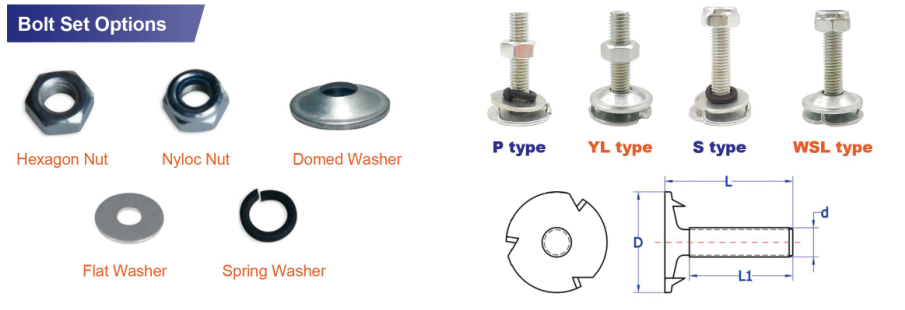
Fasteners do not work alone. They require complementary hardware to function correctly and maintain clamping force. Domed washers (also known as fender washers or oval washers) are critical. They distribute the nut pressure evenly across the bucket side. This prevents the nut from pulling through polymer buckets or distorting steel buckets. Nyloc nuts (nylon insert lock nuts) are essential for preventing vibrational backing-off. Standard hex nuts will vibrate loose in a vertical conveying system within days. Always replace nuts and washers when replacing bolts; never reuse old hardware.
Implement a realistic preventative maintenance schedule to catch loose hardware before it causes a catastrophic failure. Check fastener tension after the first 40 hours of operation on a new belt. The new rubber will compress and take a "set," causing initial loosening of the nuts. After this break-in period, inspect fastener tension quarterly. Inspect the back of the belt for micro-tears around the bolt heads, which indicates over-torquing or incorrect bolt selection. Catching a loose bucket early prevents it from detaching and causing massive damage to the elevator casing and pulleys.
Audit your historical maintenance logs to identify your most common fastener failure modes before ordering new hardware.
Measure your current belt thickness and verify minimum pulley diameters against your conveyor engineering specifications.
Request hardware samples of both Fang and Euro designs to conduct a localized pull-test on a scrap piece of your current belt.
Implement a mandatory torque-wrench policy for all future bucket installations to prevent belt crushing.
Contact a component specialist to match your new fasteners to your specific belt matrix and bucket material.
A: Standard carriage bolts have a square neck under the head designed for wood or metal framing. This square neck easily strips out of soft rubber conveyor belts under heavy loads. Fang bolts feature sharp, downward-facing teeth designed to bite directly into the belt carcass. This provides superior anti-rotation grip, allowing for proper torque application without the bolt spinning in the rubber.
A: Yes, optimal installation often requires specific hole geometries. While the two protruding noses can compress into softer, thick rubber covers, they perform best when aligned with pre-punched pilot holes. Proper punching accommodates the lugs, preventing the bolt from spinning during installation while protecting the internal fabric carcass from puncture damage.
A: You prevent spinning by utilizing specialized anti-rotation designs like fangs or forged noses. Ensure the bolt is properly seated against the belt before applying torque. Using an impact wrench at low speed helps set the anti-rotation feature into the rubber. Finally, apply the final torque smoothly with a torque wrench to prevent breaking the initial grip.
A: DIN 15237 is a strict European metric engineering standard. It dictates the exact dimensions, head curvature, thread pitch, and lug placement for conveyor and elevator bolts. Adhering to this standard ensures predictable load capacities, uniform manufacturing tolerances, and reliable global sourcing for industrial conveying systems.
A: Yes, if installed incorrectly or used on a belt that is too thin. The sharp teeth are designed to grip the internal fabric carcass. Over-torquing the nut can cause these fangs to sever the critical tension-bearing fabric plies. This weakens the belt and leads to localized tearing. Proper torque application is essential to prevent belt damage.
A: Always use nylon insert lock nuts (Nyloc nuts) to prevent the hardware from backing off under heavy vibration. Pair these with specialized domed or oval washers. These washers match the curvature of the bucket profile, distributing the clamping load evenly and preventing damage to the bucket mounting holes.
A: Fasteners should be inspected quarterly and replaced immediately if threads are damaged or shanks show wear. As a strict rule, always install completely new bolts, nuts, and washers whenever installing a new conveyor belt or replacing the elevator buckets. Reusing old hardware compromises system integrity and clamping force.


