

close
Choose Your Site
Global
Social Media


Views: 0 Author: Site Editor Publish Time: 2026-08-19 Origin: Site


Fastener failure in bulk material handling systems carries massive operational stakes. When a single bolt shears or degrades from rust, it triggers catastrophic belt failure. This leads directly to unplanned downtime, damaged equipment, and severe safety hazards on the facility floor. You rely on these small components to hold massive weights under constant motion. Their integrity dictates the reliability of the entire system.
Engineers face a continuous dilemma during system design and maintenance. You must balance the upfront procurement of standard fasteners against the long-term maintenance burdens created by harsh, corrosive, or high-load environments. Choosing the wrong material accelerates wear and forces premature replacements.
Evaluating carbon steel versus stainless steel hardware requires a strict comparative framework. You must analyze tensile strength and environmental resilience. Understanding how these metals react to load and moisture ensures you select the exact hardware needed to keep your facility running without interruption.
Strength vs. Environment: Carbon steel offers superior raw tensile strength and affordability for dry, high-impact applications, while stainless steel provides critical defense against chemical and moisture-induced degradation.
The Lifecycle Equation: The higher initial cost of stainless steel fasteners is frequently offset by reduced maintenance cycles and extended belt life in corrosive environments.
Galvanic Risks: Mixing carbon steel and stainless steel hardware accelerates galvanic corrosion, requiring strict material uniformity across bolts, nuts, and washers.
Grade Specificity: Selecting the correct alloy (e.g., SUS304 elevator bolts for general corrosion resistance vs. 316 for marine/chemical exposure) is as critical as the base material choice.
Hardware in bulk material handling endures complex mechanical stress. The primary force acting on bucket elevator bolts is shear stress. The anatomy of the connection dictates this. The fanged head of the bolt bites into the rubber belt carcass. The shank passes through the belt and the mounting hole of the bucket. A domed washer and a nylon-insert locknut secure the assembly. When the elevator runs, the belt travels vertically, carrying heavy aggregate or grain. The weight of the material pushes down on the bucket, creating a cantilever effect. This cantilever force tries to pry the bucket off the belt, putting the top row of bolts in extreme tension and the bottom row in compression.
When the belt reaches the head pulley, it bends to conform to the radius of the drum. The rigid steel or plastic bucket does not bend. This geometric mismatch forces the bolt shank to act as a pivot point, absorbing massive shear loads right at the interface between the belt surface and the back of the bucket. The bolt shank must absorb this shear force thousands of times per day. If the metal is too soft, the shank bends. If it is too brittle, it snaps. Continuous vibrational fatigue complicates these forces. Rapid micro-movements threaten to loosen nuts and weaken the metal grain structure. Fasteners must possess enough yield strength to resist stretching under these dynamic loads.
Ambient conditions dictate your baseline material requirements. You cannot select hardware based on mechanical strength alone. Humidity levels, temperature fluctuations, and airborne particulates directly impact metal longevity. The boot pit, located at the lowest point of the elevator leg, is notorious for collecting moisture, spilled material, and sludge. When the belt stops, the bottom buckets sit in this damp environment. If the facility handles grain, the dust mixes with ambient humidity to form a corrosive paste that packs around the bolt heads. If the facility handles salt or fertilizer, this paste becomes highly acidic. The hardware must survive being submerged in this material during unexpected shutdowns.
Exposure to specific substances accelerates degradation. Fertilizers introduce harsh nitrates. Coastal facilities deal with airborne saline. Food-grade operations require aggressive chemical washdowns to maintain sanitary conditions. Each of these environments attacks the molecular structure of the metal differently. You must establish a clear environmental baseline before specifying the hardware material.
Industrial fasteners must meet strict evaluation lenses to ensure safety and reliability. Engineering teams rely on established specifications from organizations like ASME, ASTM, and ISO. These standards define the acceptable chemical composition, dimensional tolerances, and minimum tensile strengths for industrial hardware. For example, ASTM F593 governs the requirements for stainless steel fasteners, while SAE J429 outlines the mechanical properties for carbon steel.
Compliance guarantees consistency. A Class 2A/2B thread fit is standard for industrial fasteners, providing a balance between holding power and ease of assembly. When you order hardware graded to a specific standard, you know exactly how it will perform under load. Ignoring these standards introduces unacceptable risk. Counterfeit or ungraded hardware often contains metallurgical flaws or inconsistent thread pitches. This leads to loose nuts that vibrate off during operation. A loose bucket will catch on the elevator casing, ripping the belt and causing a massive material spill.
Carbon steel is an alloy composed primarily of iron and carbon. This specific metallurgical profile delivers exceptional mechanical properties. The addition of carbon to the iron matrix hardens the metal, locking the iron lattice in place and significantly increasing its yield strength. This prevents the metal from yielding under stress. Grade 5 carbon steel bolts are quenched and tempered to achieve a specific hardness. They offer a high proof load, meaning they can be tightened to a high clamping force without permanently stretching.
This high clamping force is necessary to compress the rubber belt and keep the fanged bolt head seated securely. When raw strength is the primary requirement, carbon steel excels. It resists the intense shear forces generated by heavy aggregate materials moving over large pulleys. The rigid structure of the alloy prevents the bolt from stretching under the continuous downward pull of fully loaded buckets.
Certain operational environments perfectly align with the properties of carbon steel elevator bolts. Grain handling facilities often utilize this hardware. The indoor, dry nature of grain storage minimizes moisture exposure while demanding high load capacities. Dry aggregate mining operations and cement plants also benefit from the raw tensile strength required to move heavy rocks, minerals, and abrasive powders.
Climate-controlled industrial processing plants represent another ideal use case. When ambient humidity is strictly regulated and chemical exposure is non-existent, the threat of rust diminishes. In these controlled settings, the mechanical superiority of carbon steel can be fully leveraged without the risk of rapid environmental degradation.
To extend the usability of carbon steel, manufacturers often apply protective coatings. Zinc plating is applied via electroplating, leaving a thin, bright layer of zinc. It provides a sacrificial layer of protection against surface-level rust. The zinc oxidizes before the underlying iron, temporarily shielding the structural integrity of the fastener. However, it offers minimal protection in a highly abrasive environment.
Hot-dip galvanizing dips the bolt in molten zinc, creating a thick, durable coating. While more robust, this thick coating clogs the threads. You often have to over-tap the nuts to make them fit, which reduces the thread engagement and weakens the connection. Furthermore, inside a bucket elevator, abrasive wear is constant. As the bucket digs into the material in the boot pit, the abrasive action acts like sandpaper, stripping the zinc off the hardware in a matter of weeks. Once the raw steel is exposed, the protective benefits vanish.
The lifespan ratio of carbon steel makes it highly attractive for general-use applications. Iron and carbon are abundant raw materials. The manufacturing process is straightforward, utilizing standard tooling and highly optimized production lines. This results in a highly accessible fastener that delivers massive mechanical strength.
When moisture is negligible, carbon steel remains the most logical choice. You secure maximum load-bearing capacity for the initial investment. In dry environments where the metal will not rust, the lifespan of the hardware easily matches the lifespan of the belt, maximizing operational efficiency.
The primary weakness of carbon steel is its rapid degradation when exposed to moisture or chemicals. Raw or compromised carbon steel oxidizes quickly. Red rust eats away at the thread profile, causing nuts to seize. This makes routine maintenance incredibly difficult, often requiring technicians to cut the hardware off the belt with a grinder, which risks catching the rubber belt on fire.
As rust penetrates the shank, the structural cross-section of the bolt shrinks. This weakens the fastener, drastically reducing its shear and tensile capacities. What started as a high-strength component quickly becomes a fragile liability, ready to snap under standard operational loads. Hydrogen embrittlement is another risk if the bolts are improperly coated during the electroplating process, leading to sudden, brittle fractures under tension.
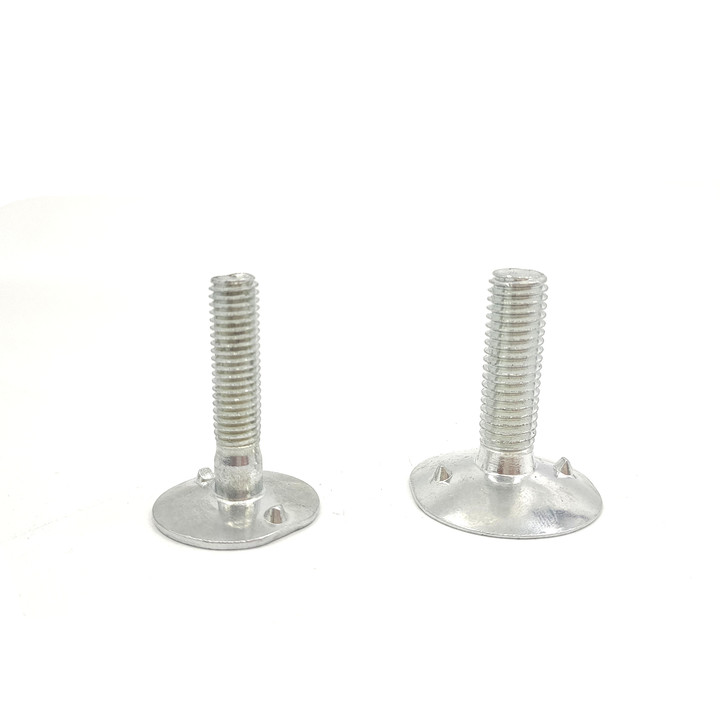
Stainless steel defends against degradation through a specific metallurgical mechanism. The alloy contains a minimum of 10.5% chromium. When exposed to oxygen, this chromium forms a microscopic, invisible passive oxide layer on the surface of the metal. This layer is only a few nanometers thick, but it is completely impermeable to water, blocking moisture from reaching the underlying iron.
The beauty of this layer is its self-healing nature. When a rock scratches the bolt head, exposing raw metal, the chromium instantly reacts with oxygen in the air to form a new oxide layer. This happens in milliseconds. It allows the hardware to survive in environments that would destroy standard iron alloys. However, this process requires oxygen. If the bolt is buried in wet, packed sludge where oxygen cannot reach it, the passive layer cannot form, and the metal can suffer from localized crevice corrosion.
Not all stainless alloys offer the same level of protection. Standard 304 stainless is an austenitic alloy containing 18% chromium and 8% nickel. It handles water, steam, and mild organic chemicals perfectly. SUS304 elevator bolts perform exceptionally well in food processing facilities and agricultural settings where ambient humidity is high but harsh chemicals are absent.
For extreme environments, 316 stainless steel is required. This grade adds 2-3% molybdenum. Molybdenum specifically resists chloride pitting. Chlorides, found in salt and many fertilizers, attack the passive layer of 304 stainless, creating microscopic pits that eventually crack the bolt. If your facility processes fertilizers, operates near marine environments, or utilizes highly acidic washdown chemicals, 316 is the only alloy that will survive the exposure.
Upgrading to corrosion resistant elevator bolts requires calculating the return on your material investment. The initial procurement involves expensive alloying elements like chromium, nickel, and molybdenum. However, this upfront expense must be weighed against long-term operational savings.
Corrosion-resistant hardware eliminates the labor costs associated with cutting rusted nuts off belts. It prevents the catastrophic downtime caused by weakened bolts shearing and dropping buckets down the elevator leg. By extending the maintenance lifecycle and protecting the expensive elevator belt from hardware-induced damage, the long-term value of stainless alloys consistently outperforms standard metals in wet conditions.
Engineering reality dictates a trade-off between corrosion resistance and raw strength. Standard austenitic stainless steel generally possesses a lower yield strength than high-grade carbon steel. It is slightly softer and more prone to stretching under extreme tension. While austenitic stainless hardens when cold worked, its initial yield point requires careful consideration.
When switching from carbon to stainless steel elevator bolts, you must recalculate your load requirements. You may need to increase the bolt diameter, utilize a higher density bucket spacing, or reduce the overall payload to compensate for the lower tensile capacity. Failing to account for this mechanical difference can lead to hardware yielding under standard operational loads.
Contrasting the mechanical capacities of these metals reveals clear operational boundaries. Carbon steel prioritizes raw strength. It handles massive shear loads and resists stretching under heavy bucket weights. It is the default choice when mechanical force is the primary threat to system integrity.
Stainless steel prioritizes longevity in hostile conditions. While it handles standard industrial loads effectively, it cannot match the extreme yield thresholds of hardened carbon alloys. You must prioritize carbon when moving massive, dry payloads, and pivot to stainless when moisture threatens to compromise the structural integrity of the metal.
Understanding how each material reacts to specific industrial threats simplifies the selection process. The following matrix outlines the expected performance of both materials across common operational hazards.
Environmental Threat | Carbon Steel | Stainless Steel (304/316) |
|---|---|---|
Ambient Moisture / Humidity | High risk of surface rust; requires coating. | Excellent resistance; passive layer prevents rust. |
Chemical Washdowns | Rapid degradation and thread seizing. | High resistance (316 required for harsh acids). |
Abrasive Dust / Aggregate | Strips coatings quickly, exposing raw metal. | Passive layer self-repairs despite surface scratching. |
Extreme Temperatures | Maintains strength but oxidizes faster in heat. | Maintains structural integrity and corrosion defense. |
Maintenance teams can easily distinguish between these materials during routine system audits. Carbon steel typically presents a dull, black appearance, or a matte grey finish if zinc-flaked. Stainless steel features a bright, reflective, and smooth metallic finish.
You can use a simple magnet to test your hardware in the field. Carbon steel is highly magnetic. Austenitic stainless steels, like 304 and 316, are generally non-magnetic. If a maintenance tech is unsure what type of bolt is in their hand, a quick magnet test provides an immediate answer. This prevents the accidental installation of a carbon steel bolt in a highly corrosive zone, allowing teams to correct the error before galvanic corrosion destroys the connection.
Sourcing these materials at scale involves different supply chain realities. Carbon steel is universally available with short lead times and highly stable bulk availability. Its abundance makes it easy to scale for massive facility overhauls.
Stainless steel procurement requires more strategic planning. The availability of alloying elements fluctuates. Lead times for specific grades, particularly marine-grade 316, can be longer. Facilities must forecast their maintenance needs accurately to ensure they have the necessary corrosion-resistant hardware on hand when required.
Mixing dissimilar metals within the same fastening assembly triggers a destructive electrochemical reaction. If you thread a carbon steel nut onto a stainless steel bolt, you create a galvanic cell. The moisture in the air acts as an electrolyte, connecting the two metals.
In this scenario, the less noble metal—the carbon steel—becomes the anode and breaks down rapidly. It will rust and corrode at an accelerated rate, essentially sacrificing itself to the cathodic stainless steel. This leads to completely seized threads and structural failure. The carbon steel nut literally dissolves to protect the stainless bolt, eventually falling off and dropping the bucket down the leg. You must mandate strict material uniformity across all bolts, nuts, and washers to prevent this reaction.
Stainless steel fasteners carry a specific installation risk known as thread galling. Galling is a form of adhesive wear. Because the metal is relatively soft and generates high friction, the threads can cold-weld together during installation. The friction of tightening the nut strips the oxide layer. The raw stainless surfaces rub together, generate heat, and weld together at a microscopic level.
Mitigating this risk requires specific installation protocols. Technicians must apply a barrier, such as molybdenum disulfide or copper-based anti-seize pastes, to the threads prior to assembly. Furthermore, installation RPMs must be drastically reduced. Using high-speed pneumatic impact wrenches on stainless hardware almost guarantees galling. Slow, controlled torque application using hand tools or low-speed settings is mandatory.
The reliability of your hardware depends entirely on the manufacturing standards of your chosen partner. You must thoroughly vet your elevator bolt supplier to ensure consistent quality. Look at how the threads are formed. Cut threads are machined into the metal, which cuts the grain structure and creates weak points. Rolled threads are formed by pressing dies into the metal, compressing and aligning the grain structure. Rolled threads are significantly stronger and smoother, which reduces the risk of galling.
Consistent thread rolling quality and strict adherence to dimensional tolerances are non-negotiable. Ask your supplier for their manufacturing process. Demand Material Test Reports (MTRs) to verify the chemical composition of the steel. A qualified supplier will demonstrate a proven track record of metallurgical consistency, ensuring every batch performs exactly to specification.
Audit your current bucket elevator environment to identify primary threats like moisture, chemical exposure, or abrasive wear.
Calculate your exact load requirements to determine the minimum yield strength needed for your hardware before installation.
Inspect existing belts for signs of galvanic corrosion or rusted hardware that requires immediate replacement.
Implement strict installation protocols, including the mandatory use of anti-seize lubricants, when transitioning to stainless alloys.
A: No. Carbon steel typically possesses a higher raw yield strength, making it better suited for extreme heavy-duty loads. Stainless steel sacrifices some tensile strength to incorporate the alloying elements that provide its superior environmental durability and corrosion resistance.
A: SUS304 is the Japanese industrial standard equivalent to 304 stainless steel. These bolts are primarily used in food processing, agriculture, and general moisture environments where defense against ambient humidity and mild washdowns is required.
A: You should never mix these metals. Doing so triggers galvanic corrosion. The moisture in the air acts as an electrolyte, causing the less noble carbon steel to break down and rust rapidly. This results in seized threads and premature hardware failure.
A: You must assess the specific chemicals present. For general outdoor humidity, standard 304 stainless is sufficient. However, if the hardware is exposed to harsh fertilizers containing urea or potash, you must upgrade to 316 stainless steel to prevent chemical pitting.
A: You can prevent galling by applying a high-quality anti-seize lubricant to the threads before installation. Avoid using high-speed impact wrenches. Install the nuts slowly with controlled torque to minimize the friction that causes cold-welding.
A: Inspection schedules depend on the operating environment. In harsh, corrosive, or high-vibration settings, conduct visual audits monthly. Look for signs of rust, missing nuts, or stretched shanks. In dry, climate-controlled environments, quarterly inspections are generally sufficient to maintain system integrity.


